
Table of Contents
Why AML Matters for Your CISI Exam
Anti-Money Laundering (AML) regulations are among the most heavily tested topics in the CISI UAE Financial Rules and Regulations exam. The UAE has significantly strengthened its AML framework in recent years, and CISI exams reflect this increased regulatory focus.
Understanding AML is not just about passing the exam - it is a critical competency for any finance professional working in the UAE. This guide covers the essential AML concepts you need to master.
The UAE AML Framework
The UAE’s AML regime is built on several key legal pillars:
- Federal Decree-Law No. 20 of 2018 - The primary AML/CFT legislation
- Cabinet Decision No. 10 of 2019 - Implementation regulations
- CBUAE guidance notices - Sector-specific requirements for financial institutions
- SCA regulations - AML requirements for securities and investment firms
- DFSA rules - AML regime within the DIFC
For the CISI exam, you need to understand how these different pieces fit together and which applies in specific scenarios.
Customer Due Diligence (CDD)
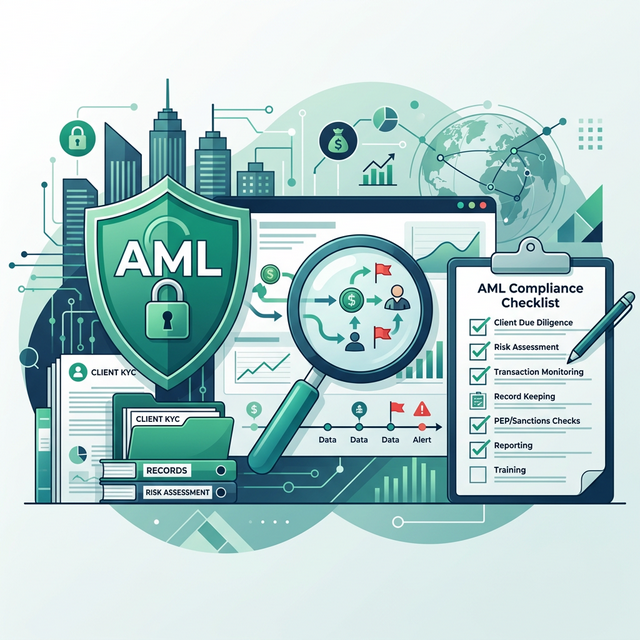
Customer Due Diligence is the cornerstone of AML compliance and features prominently in the exam. The three levels you must know are:
Simplified Due Diligence (SDD) - Applied to lower-risk customers where reduced verification is permitted. Available only when specific conditions are met and the institution has assessed the risk as genuinely low.
Standard Due Diligence (CDD) - The baseline requirement for all customer relationships. Includes verifying identity using reliable documents, understanding the purpose and nature of the business relationship, and conducting ongoing monitoring.
Enhanced Due Diligence (EDD) - Required for higher-risk customers, including Politically Exposed Persons (PEPs), customers from high-risk jurisdictions, and complex or unusual transactions. EDD involves additional verification, senior management approval, and enhanced ongoing monitoring.
Suspicious Activity Reporting
One of the most frequently tested areas is the obligation to report suspicious activities. Key points for the exam:
- All staff have a duty to report internal suspicions to the Money Laundering Reporting Officer (MLRO)
- The MLRO decides whether to file a Suspicious Transaction Report (STR) or Suspicious Activity Report (SAR) with the Financial Intelligence Unit (FIU)
- Filing must be prompt - unnecessary delays can result in regulatory action
- Tipping off is a criminal offence - you must not inform the customer that a report has been or will be filed
- No minimum threshold - suspicion alone triggers the reporting obligation, regardless of the transaction amount
Key Numerical Thresholds
The CISI exam frequently tests specific numerical values. Make sure you know:
- AED 55,000 - Threshold for cash transaction reporting
- Wire transfer thresholds - Requirements for originator information in cross-border transfers
- Record keeping periods - Minimum 5 years for transaction records and CDD documents after the end of the relationship
- Specific penalties - Fines and imprisonment terms for AML violations
Create flashcards for each of these thresholds - they are commonly tested in direct recall questions.
Politically Exposed Persons (PEPs)
PEPs are a favourite exam topic. You must understand:
- Who qualifies as a PEP - Current and former holders of prominent public functions, their family members, and close associates
- PEP categories - Domestic PEPs, foreign PEPs, and international organisation PEPs
- EDD requirements for PEPs - Senior management approval, source of wealth and funds verification, and enhanced ongoing monitoring
- Duration of PEP status - How long after leaving a public position someone remains classified as a PEP
Sanctions and Targeted Financial Sanctions
The UAE implements UN Security Council sanctions and maintains its own local sanctions list. For the exam, understand:
- The obligation to screen customers against sanctions lists
- The requirement for immediate freezing of assets
- Reporting obligations when a sanctions match is identified
- The difference between comprehensive and targeted sanctions
- The role of the UAE Executive Office in sanctions implementation
Exam Strategy for AML Questions
AML questions in the CISI exam often present scenario-based situations where you must identify the correct course of action. To succeed:
- Identify the risk indicators in the scenario
- Determine the appropriate level of due diligence
- Consider reporting obligations - when in doubt, report
- Remember that “tipping off” is never acceptable
- Apply the principle of proportionality - measures should match the risk level
Understanding the intent behind regulations helps you answer scenario questions correctly, even when the exact situation is unfamiliar. The UAE’s AML framework is designed to prevent financial crime while enabling legitimate business - keep this principle in mind.
Staying Current
UAE AML regulations are actively evolving. The country’s commitment to meeting international standards, following its FATF assessment, means regular updates and enhancements. Ensure your study materials reflect the latest regulatory position and check for any updates before your exam date.
Frequently Asked Questions
1 How much of the CISI UAE exam covers AML regulations?
Anti-Money Laundering and Counter Financing of Terrorism (AML/CFT) content represents a significant portion of the UAE Financial Rules and Regulations exam, typically around 15-20% of questions.
2 What are the key UAE AML laws I need to know for the CISI exam?
Focus on Federal Decree-Law No. 20 of 2018 on Anti-Money Laundering, Cabinet Decision No. 10 of 2019, and CBUAE guidelines. Understanding the roles of the Financial Intelligence Unit (FIU) and reporting obligations is essential.
3 What is the difference between STR and SAR in UAE AML regulations?
A Suspicious Transaction Report (STR) covers completed transactions that appear suspicious, while a Suspicious Activity Report (SAR) covers activities that have not yet resulted in a transaction. Both must be filed with the UAE FIU.
4 Do I need to memorise specific monetary thresholds for the CISI exam?
Yes. Key thresholds include the AED 55,000 threshold for cash transaction reporting and the requirement to conduct Customer Due Diligence for transactions above certain amounts. These are commonly tested.
5 How does the UAE's approach to AML differ from international standards?
The UAE follows FATF recommendations but has implemented additional measures specific to the region, including enhanced due diligence for certain sectors, the Godhawk goAML platform for reporting, and specific rules for designated non-financial businesses and professions.
Ready to Ace Your CISI Exam?
Join thousands of finance professionals who passed their exams on the first attempt with our AI-powered study platform.
Explore Our CISI Trainers