
Table of Contents
CISI IISI
Explore syllabus-aligned study tools, realistic practice and course-grounded AI support.
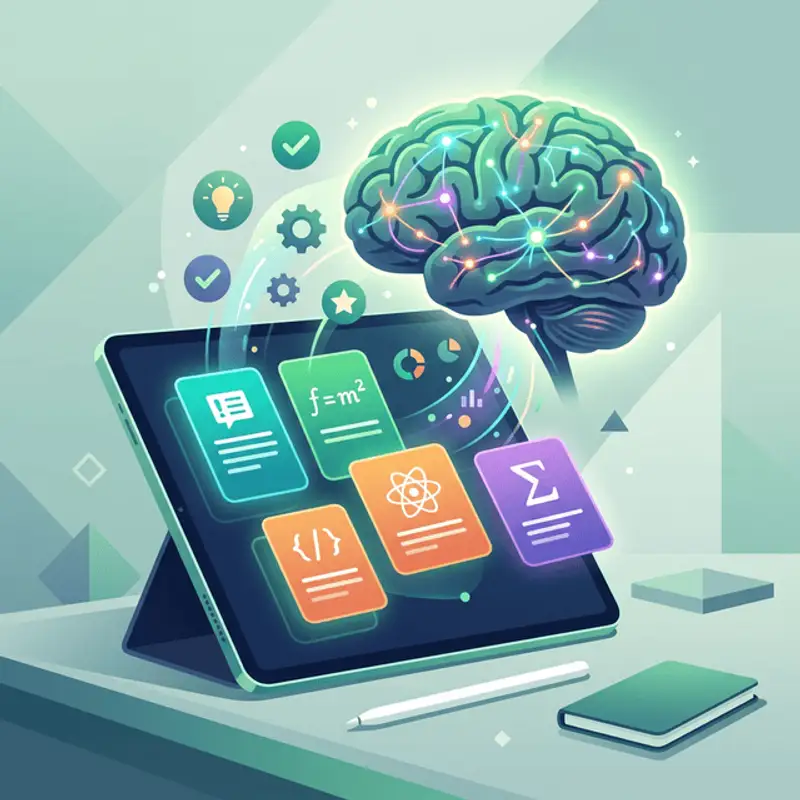
The Science Behind Flashcards
When preparing for a CISI exam, the volume of information you need to retain can feel overwhelming. Regulatory frameworks, financial definitions, compliance requirements, and numerical thresholds — it is a lot to absorb and recall under timed exam conditions. This is where digital flashcards become your most powerful study weapon.
Retrieval practice and spaced review generally outperform repeated rereading when the later test requires recall. There is no universal “200–300%” gain or fixed rule that every learner forgets 70% within 24 hours; results depend on the material, delay, prior knowledge, feedback and how retention is measured. Use your own delayed-recall data to set intervals.
For CISI candidates specifically, this means the hours you spent reading the workbook on Monday are largely wasted by Wednesday unless you actively reinforce that knowledge. Digital flashcards are the antidote to this natural forgetting process.
How Spaced Repetition Works
Traditional study involves reading the same material multiple times, hoping it sticks. Spaced repetition takes a fundamentally different, scientifically-grounded approach:
- You review a flashcard and rate how well you know the answer
- The algorithm schedules the next review based on your rating — a card you struggled with might reappear in 10 minutes, while one you answered instantly might not return for 3 days
- Easy cards appear less frequently — saving you valuable study time
- Difficult cards appear more often — laser-targeting your weakest knowledge gaps
- Over time, all cards move into long-term memory through optimally timed reviews
This means you spend your study time where it matters most, rather than reviewing concepts you already know well. The efficiency gains are dramatic: candidates using spaced repetition typically achieve the same level of knowledge in 40% less study time compared to traditional methods.
Why Digital Flashcards Beat Traditional Methods
For CISI exam preparation specifically, digital flashcards offer several distinct advantages over traditional study methods and even paper flashcards:
- Portability — Study during your commute, lunch break, or waiting time using your phone or tablet. Every spare 5-minute window becomes a productive study session
- Adaptive learning — The system learns your personal strengths and weaknesses automatically, something paper flashcards simply cannot do
- Progress tracking — See exactly which topics need more attention through detailed analytics and retention rate dashboards
- Multimedia support — Include diagrams, regulatory tables, formatted definitions, and even colour-coded categories that enhance visual memory
- Consistent scheduling — Daily review notifications keep you accountable and on track, eliminating the willpower required to self-schedule reviews
- Infinite scalability — Unlike a physical deck that becomes unwieldy at 200+ cards, digital systems handle thousands effortlessly with smart filtering
Free CISI IISI Practice Questions & Exam Preview
Try 15 CISI IISI practice questions from Equities and Stocks
Practice CISI IISI exam questions with answers and explanations. The full course includes 5 mock exams and complete syllabus coverage.
Exam Preview
In the context of financial markets, what distinguishes a primary market from a secondary market?
Flashcards
What is the primary function of the financial services sector?
Focus Learn
- Distinction between wholesale and retail sectors
- Functions of Equity, Bond, FX, and Derivatives markets
- Types of Commercial Lending (Lines of credit, Unsecured loans, Term loans)
- Characteristics of Private and Digital/Crypto markets
- Role of Investment Banks in M&A, finance raising, and proprietary trading
- Key functions of Custodian banks (safekeeping, settlement, asset servicing)
- Definition of a financial conglomerate by the Bank for International Settlements (BIS)
- Concept of mutual societies and the demutualization process
- Distinction between P2P lending and Crowdfunding forms
- The role of Insurance Companies and Pension Funds as major market investors
Financial Markets Overview
The financial services sector links organizations seeking capital with those with capital available to invest. The wholesale/professional sector includes Equity markets (trading shares on regulated exchanges with indices like S&P 500, FTSE 100), Bond markets (debt instruments for raising capital, influenced by interest rates and credit risk), Foreign Exchange (decentralized OTC trading of currencies for trade, speculation, and hedging), Derivatives (trading options, swaps, futures based on underlying assets like interest rates, mostly OTC but moving to exchanges), Insurance (management of personal/corporate risk, dominated by entities like Lloyd's and large reinsurers like Munich Re), Commercial Lending (business loans, term loans, unsecured loans, lines of…
Unlock all Focus Learn
Open every chapter’s key areas, pitfalls, exam traps and key numbers.
Creating Effective CISI Flashcards
Not all flashcards are created equal. Poorly written cards can waste time without improving recall. Follow these principles for maximum effectiveness:
Keep cards atomic — Each card should test one specific piece of knowledge. Instead of “What does the UAE CMA (formerly SCA) regulate?”, break it into individual cards for each regulatory responsibility. An atomic card is easier to rate accurately, which means the spaced repetition algorithm can schedule it more effectively.
Use questions, not statements — “What is the minimum capital requirement for a Category 4 firm under DFSA rules?” is more effective than “Category 4 firms have a minimum capital requirement of…” Questions force your brain into retrieval mode, while statements encourage passive recognition — and recognition does not equal recall on exam day.
Include context — For regulatory content, add context about when and why a rule applies. This helps you answer scenario-based questions on the exam, where you need to apply knowledge to specific situations rather than simply recite definitions.
Add reverse cards — Create both “definition to term” and “term to definition” cards. This strengthens neural pathways from multiple directions. For example, create one card asking “What is AML?” and another showing the definition and asking you to name the concept.
Key Topics to Cover with Flashcards
For the CISI International Introduction to Securities and Investment (IISI) module and other UAE-focused qualifications, focus your flashcards on:
- AML/CFT regulations — reporting thresholds, suspicious activity definitions, and compliance officer responsibilities
- Regulatory framework — licensing categories, capital requirements, and conduct of business rules under UAE CMA (formerly SCA), DFSA, and ADGM
- Market mechanics — settlement cycles (T+2), the role of central counterparties, and exchange trading processes
- Client classification — retail, professional, and market counterparty definitions and the protections each category receives
- Key numerical values — monetary thresholds, time limits, percentage requirements, and deadline-based rules
- Financial instruments — bonds, equities, derivatives, and collective investment schemes with their key characteristics
Building a Daily Flashcard Habit
The power of flashcards comes from consistency, not marathon sessions. Here is how to integrate them seamlessly into your daily routine without requiring massive time commitments:
- Morning review (10 minutes): Review due cards over coffee before work — start the day with retrieval practice while your mind is fresh
- Lunch break (10 minutes): Quick review session using your phone — transform dead time into active learning
- Evening creation (15 minutes): Create new cards from the day’s study material — the act of writing the card itself is a learning exercise
- Weekend deep review (30 minutes): Extended session covering all categories — address any cards that have accumulated during the week
Even 20-30 minutes per day of flashcard review, spread across your preparation period, can dramatically improve your recall on exam day. The cumulative effect of daily practice is far more powerful than occasional intensive study sessions. Over a 6-week study period, this adds up to over 14 hours of targeted retrieval practice — time that would otherwise be lost to passive re-reading.
Measuring Your Progress
Track your flashcard metrics to gauge your exam readiness objectively:
- High same-day accuracy can reflect recent exposure; check the same cards again after a delay before calling them secure.
- Slow but correct recall signals that the interval or card wording may need adjustment before timed practice.
- Repeated failure on one card often means it contains several facts or lacks context; split it, return to the source and test the distinction in a scenario.
When your overall retention rate consistently exceeds 85% and you are completing review sessions quickly with minimal hesitation, you have built the strong knowledge foundation needed for exam day success.
Combining Flashcards with Other Study Methods
Flashcards work best as part of a complete study ecosystem. No single method is sufficient alone — the most successful CISI candidates use an integrated approach:
- Read the syllabus material to build conceptual understanding and context
- Create flashcards immediately after each study session to capture key facts, definitions, and thresholds
- Review daily using spaced repetition to combat the forgetting curve
- Complete mock exams to test your ability to apply knowledge under timed, exam-like conditions
- Revisit flashcards for any topics where mock exam performance revealed weaknesses — close the loop
This integrated approach ensures you both understand concepts deeply and can recall specific details quickly under pressure — exactly what the CISI exam demands. The candidates who pass on their first attempt are not necessarily the ones who study the longest, but the ones who study the smartest.
Frequently Asked Questions
1 How are digital flashcards different from paper flashcards?
Digital flashcards use spaced repetition algorithms that automatically schedule reviews at optimal intervals. They adapt to your performance, showing difficult cards more frequently and easy cards less often.
2 How many flashcards should I create for the CISI exam?
Quality matters more than quantity. Aim for 200-400 well-crafted flashcards per module, focusing on key definitions, regulatory requirements, numerical thresholds, and commonly tested concepts.
3 When should I start using flashcards in my study plan?
Start creating flashcards from your very first study session. Review them daily throughout your preparation. The earlier you start, the more review cycles your brain completes before exam day.
4 Can flashcards alone help me pass the CISI exam?
Flashcards are most effective as part of a complete study plan. Combine them with reading the syllabus material, practising mock exams, and applying knowledge to scenario-based questions.
5 What topics should I focus my CISI flashcards on?
Prioritise regulatory definitions, key financial ratios, AML/CFT requirements, UAE CMA (formerly SCA) and DFSA rules, and any content involving numerical thresholds or specific time periods - these are the most commonly tested areas.
Keep learning
Related Insights
The Role of Mock Exams in CISI Certification Success
Use CISI mock exams to find weak topics, set the right exam pace and review wrong answers. Includes a worked score analysis, error log and readiness checks.

How to Study for CISI Exams While Working Full-Time in Dubai
Practical strategies for Dubai finance professionals balancing CISI exam preparation with demanding work schedules. Learn proven time-blocking and study techniques.

How Hard is the CISI Exam in 2026? (Pass on Your First Attempt)
Wondering how hard the CISI exam is? Learn how formats differ by unit and how to prepare with syllabus mapping, active recall, timed practice, and error analysis.
Ready to Prepare for Your Exam?
Prepare with syllabus-aligned study tools, realistic practice and course-grounded AI support.
Explore Courses