
Table of Contents
- • CySEC AML exam format and official facts
- • What the CySEC AML syllabus covers
- • Why the CySEC AML exam can be difficult
- • A practical CySEC AML study plan
- - Stage 1: Build the framework
- - Stage 2: Connect governance to daily controls
- - Stage 3: Master CDD and reporting
- - Stage 4: Add the CASP layer
- - Stage 5: Move from Study Mode to timed mocks
- • How to use the 60 minutes effectively
- • Check the latest CySEC material before your sitting
- • Final CySEC AML readiness checklist
CySEC AML Certification
Explore syllabus-aligned study tools, realistic practice and course-grounded AI support.
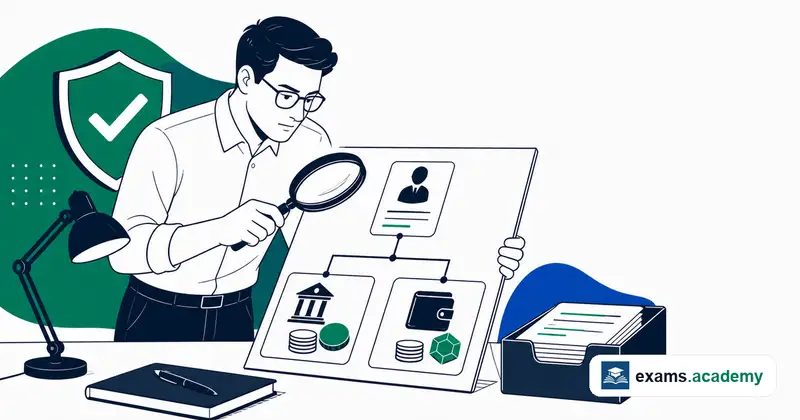
The CySEC AML exam tests whether you can apply Cyprus anti-money-laundering and counter-terrorist-financing requirements—not merely recognise definitions. A strong preparation plan must connect the legal framework to the practical responsibilities of the board, the AML Compliance Officer (AMLCO), employees, CySEC and MOKAS.
Quick answer: the current examination has 40 multiple-choice questions, lasts 60 minutes and requires at least 70% to pass. The current official syllabus contains eight examinable chapters. Use the latest CySEC syllabus for your exam year, then combine chapter learning with active recall and full-length timed practice.
CySEC AML exam format and official facts
| Exam feature | Current specification |
|---|---|
| Delivery | Computer-based assessment |
| Questions | 40 multiple-choice questions |
| Duration | 60 minutes |
| Pass mark | At least 70% |
| Average pace | 90 seconds per question |
| Official registration fee | €300 at the time of verification |
| Examination location | CySEC examination centre in Nicosia under the current arrangements |
| Syllabus structure | Eight examinable chapters |
A 70% result on a 40-question practice paper is 28 correct answers. Do not treat 28 as your preparation target, however. Aim to pass several unseen full mocks with a clear safety margin, because the mix of topics and difficulty will vary.
CySEC states that any person may sit the AML examination. It also explains that another professional qualification does not by itself create an exemption. Candidates should confirm registration instructions and current administrative arrangements on the official CySEC AML examination page.
What the CySEC AML syllabus covers
The syllabus is divided into eight connected chapters:
- Introductory Provisions — CySEC’s supervisory remit, certification and the AMLCO route.
- Money Laundering, Terrorist Financing and Sanctions — laundering stages, methods, sector exposure and sanctions controls.
- Legal and Regulatory Requirements — the Cyprus framework, MOKAS, EU requirements, FATF and MONEYVAL.
- The AML Compliance Culture — board oversight, AMLCO responsibilities, internal audit and staff training.
- Assessing and Managing Risks — business-wide risk, customer risk, geography, products, transactions and delivery channels.
- Know Your Customer and Customer Due Diligence — CDD triggers, beneficial ownership, PEPs, enhanced measures and ongoing monitoring.
- Transaction Monitoring and Suspicious Reporting — internal escalation, AMLCO evaluation, MOKAS reporting, red flags and tipping off.
- Crypto Asset Service Providers — the specialist CASP framework alongside ordinary obliged-entity duties.
Definitions and workbook practice material support these chapters; they should not be studied as disconnected lists. For example, the definition of beneficial ownership matters because it changes who must be identified and verified. The definition of suspicion matters because proof of a predicate offence is not required before escalation.
Why the CySEC AML exam can be difficult
The difficulty is usually precision under time pressure. Several options may sound cautious, but only one follows the correct authority, trigger and sequence.
Common sources of lost marks include:
- assigning an employee’s reporting duty to the AMLCO, or the AMLCO’s external reporting decision to the board;
- treating suspicion as if it requires proof of criminal conduct;
- remembering a monetary threshold without remembering what activates it;
- assuming enhanced due diligence replaces ordinary identification and verification;
- treating every high-risk factor as an automatic reason to reject a customer;
- confusing an internal report with an external report to MOKAS; and
- assuming CASP registration replaces the wider AML/CFT duties of an obliged entity.
Before answering, identify four things: Who is acting? What triggered the duty? What must happen next? Is there an exception or additional risk measure? This short routine prevents many role and sequence errors.
Free CySEC AML Certification Practice Questions & Exam Preview
Try 15 CySEC AML Certification practice questions from 1. Introductory Provisions
Practice CySEC AML Certification exam questions with answers and explanations. The full course includes 5 mock exams and chapter study tools.
Exam Preview
Which CySEC AML syllabus concept is best matched by this statement? “CySEC is the competent supervisory authority for the categories of obliged entities placed under it by Article 59(1)(b) of the AML/CFT Law.”
Flashcards
What should a CySEC AML candidate know about CySEC supervisory role?
Focus Learn
- CySEC supervisory role
- Supervised investment firms
- Collective-investment supervision
- Administrative-service providers
- CASP supervision
- AMLCO certification
- Examination access
- Official exam format
- Computer-based delivery
- Certification fee
What this chapter tests
This chapter establishes the certification purpose, CySEC's supervisory perimeter and the route from passing the assessment to appointment and continuing competence. Keep the official exam facts separate from the legal duties of an appointed AML Compliance Officer.
CySEC supervisory role
CySEC is the competent supervisory authority for the categories of obliged entities placed under it by Article 59(1)(b) of the AML/CFT Law.
Source anchor: Workbook 1.2.
Supervised investment firms
CySEC's AML supervision includes Cyprus investment firms and other persons providing investment services within its remit.
Source anchor: Workbook 1.2.
Collective-investment supervision
CySEC supervises relevant collective-investment and asset-management ent…
Unlock all Focus Learn
Open every chapter’s key areas, pitfalls, exam traps and key numbers.
A practical CySEC AML study plan
Stage 1: Build the framework
Start with Chapters 1–3. Learn which body performs each function and distinguish national law, supervisory requirements and international standards. You should be able to explain the relationship between CySEC, MOKAS, FATF and MONEYVAL without looking at your notes.
Stage 2: Connect governance to daily controls
Study Chapters 4 and 5 together. Governance establishes responsibility; risk assessment determines how controls are applied. Build comparison notes for the board, AMLCO, internal audit and employees. Then map customer, geographic, product, transaction and delivery-channel risks to proportionate controls.
Stage 3: Master CDD and reporting
Chapters 6 and 7 contain many closely related triggers, roles and sequences. Use flashcards for thresholds and definitions, but use scenarios for beneficial ownership, PEPs, enhanced due diligence, transaction monitoring and suspicious reporting. For every missed question, record whether the cause was a rule gap, threshold gap, role confusion, sequence error or a misread qualifier.
Stage 4: Add the CASP layer
Chapter 8 should be studied twice: first as a specialist registration and governance topic, and again as an AML application topic. A CASP remains an obliged entity. Its specialist rules do not remove customer risk assessment, CDD, ongoing monitoring, reporting and record-keeping duties.
Stage 5: Move from Study Mode to timed mocks
Use immediate-feedback practice while learning. Once you can explain the reason behind each answer, switch to complete 40-question, 60-minute mocks. Review incorrect answers and uncertain correct answers. A lucky guess does not demonstrate readiness.
How to use the 60 minutes effectively
The official pace averages 90 seconds per question, but effective timing is not perfectly even. Use three passes:
- First pass: answer clear questions promptly and mark uncertain items.
- Second pass: work through questions that require comparison, calculation or careful role analysis.
- Final check: revisit negative words such as not, false and except, and confirm that every question has an answer.
For a multiple-response practice item, test every option independently. Do not stop after finding one correct statement. For a single-best-answer item, reject options that are broadly true but do not answer the exact role, trigger or stage described in the stem.
Your mock review should be chapter based. A total score alone cannot tell you whether the next hour is better spent on MOKAS reporting, CDD triggers or CASP governance. Track accuracy across all eight chapters and retest weak areas with new wording.
Check the latest CySEC material before your sitting
AML requirements and examination arrangements can change. Your source order should be:
- the latest official CySEC syllabus and current examination notices;
- the official workbook applying to your sitting;
- your course summaries, flashcards and practice questions; and
- personal notes and memory aids.
Where older notes conflict with a current official source, the current official source takes priority. Recheck the official CySEC certifications overview shortly before registering and again during final revision. This is especially important for administrative arrangements, fees, workbook transitions and any regulatory change affecting examinable content.
Final CySEC AML readiness checklist
Before the examination, confirm that you can:
- explain the three classic stages of money laundering and distinguish terrorist financing;
- identify the roles of CySEC, MOKAS, the board, AMLCO, internal audit and employees;
- apply business-wide and customer-level risk factors rather than relying on one indicator;
- recall CDD triggers together with their context and exceptions;
- distinguish normal CDD, simplified measures and enhanced due diligence;
- follow a suspicion from transaction monitoring through internal escalation and external reporting;
- recognise tipping-off risks and transaction-monitoring red flags;
- apply the CASP rules together with ordinary AML/CFT obligations; and
- complete an unseen 40-question mock inside 60 minutes with a consistent margin above 70%.
The CySEC AML exam preparation course combines five full-length timed mocks with eight chapter summaries, 111 active-recall flashcards, a searchable quick-reference sheet and a course-grounded AI tutor. Use it to turn the official syllabus into a measurable revision plan rather than relying on passive rereading.
Frequently Asked Questions
1 What is the CySEC AML exam format?
The current CySEC AML examination is computer based and contains 40 multiple-choice questions. Candidates have 60 minutes, which gives an average of 90 seconds per question.
2 What score do I need to pass the CySEC AML exam?
The official pass mark is at least 70%. On a 40-question practice paper, 70% corresponds to 28 correct answers, although candidates should target a consistent safety margin above that level.
3 How many chapters are in the CySEC AML syllabus?
The current official syllabus has eight examinable chapters. They cover the AML framework, money laundering and terrorist financing, governance, risk, KYC and CDD, suspicious reporting, and crypto-asset service providers.
4 Can anyone sit the CySEC AML examination?
Yes. CySEC states that any person may take the examination. Holding another professional qualification does not automatically exempt a candidate from the CySEC AML assessment.
5 How should I prepare for the CySEC AML exam?
Map your study to all eight official chapters, use active recall for roles and thresholds, practise scenario questions, and complete full 40-question timed mocks. Always check the latest CySEC syllabus and examination notices for your sitting.
Keep learning
Related Insights
CISI UK Regulation and Professional Integrity Exam Guide 2026
Prepare for the CISI UK Regulation and Professional Integrity exam in 2026: format, syllabus weightings, study plan, mock strategy and key updates explained.

CISI ICWIM Exam Guide 2026: Format, Syllabus and Study Plan
Prepare for the CISI International Certificate in Wealth & Investment Management with the current exam format, eight weighted syllabus elements, study plan and diagnostic quiz.

5 Effective Study Techniques for Professional Finance Exams in 2026
Evidence-based study methods that help busy finance professionals retain complex regulatory information, manage exam anxiety, and maximize limited study time for certifications like CISI, CFA, and FRM.
Ready to Prepare for Your Exam?
Prepare with syllabus-aligned study tools, realistic practice and course-grounded AI support.
Explore Courses