
Table of Contents
ACAMS CGSS
Explore source-grounded summaries, flashcards, reference tools and realistic mock practice.
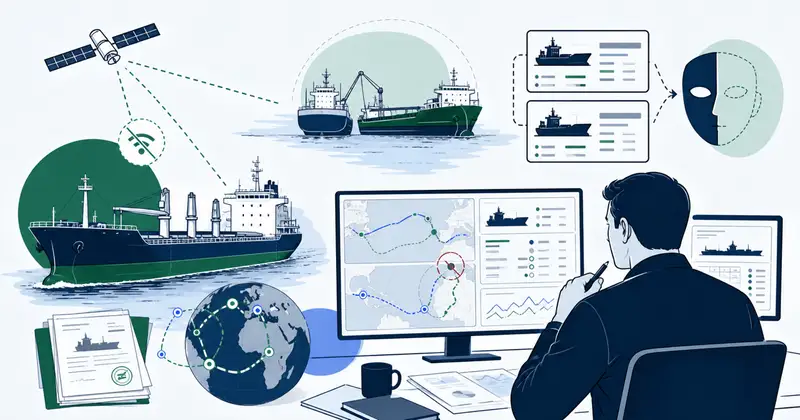
Quick answer: Maritime sanctions evasion may involve hidden vessel identity, ownership, location, cargo, origin, destination or end user. AIS gaps, ship-to-ship transfers and registry changes are indicators—not proof. Investigators should combine vessel data, trade documents, ownership records, payment information and the applicable sanctions rules.
A vessel moves through several connected systems: ownership, management, registration, insurance, ports, cargo, payments and communications. An evasion method may exploit inconsistencies between those systems rather than leave one obvious prohibited name.
The Main Maritime Red Flags
Common indicators include:
- unexplained AIS disabling, manipulation or inconsistent position data;
- ship-to-ship transfers in unusual locations or without a clear commercial purpose;
- frequent changes in vessel name, owner, operator, registry or registration details;
- routes, port calls or loitering patterns inconsistent with the declared voyage;
- cargo descriptions, quantities or dates that conflict across documents;
- unclear origin, destination, end user or beneficial owner;
- newly formed intermediaries with limited maritime experience;
- payments made by unrelated third parties; and
- repeated use of ports, counterparties or service providers connected to elevated sanctions risk.
The number of indicators matters less than their relationship. A single technical outage may be explainable. An outage during an unusual transfer, followed by altered documents and a new counterparty, creates a stronger reason for escalation.
AIS Gaps and Location Manipulation
The Automatic Identification System transmits vessel identity, position, course and related information. An AIS gap means expected data is unavailable; it does not by itself explain why.
Possible non-evasion reasons include weak coverage, equipment malfunction, maintenance and safety considerations. Investigators should examine the location, duration, timing and recurrence of the gap, then compare port records, satellite or other permitted data, voyage reports and later vessel behavior.
Data can also be falsified. Impossible speeds, abrupt jumps, duplicated identities or positions inconsistent with other evidence require technical and operational review. The correct CGSS answer preserves uncertainty until corroboration supports a conclusion.
Ship-to-Ship Transfers and Cargo Risk
Ship-to-ship transfers are used in legitimate maritime trade. Risk rises when the transfer is concealed, occurs in an unusual area, involves opaque vessels or conflicts with the declared cargo and route.
Review both vessels and their networks. Identify owners, beneficial owners, controllers, operators, charterers, cargo interests, insurers and relevant service providers. Compare quantities, bills of lading, certificates of origin, invoices, port calls and payment messages.
Cargo may be blended, relabelled or routed through intermediaries to obscure origin or destination. A document is evidence to test, not a guarantee of truth. Differences should be resolved through independent records and a coherent voyage timeline.
Free ACAMS Certified Global Sanctions Specialist (CGSS) Practice Questions & Exam Preview
Try 15 ACAMS Certified Global Sanctions Specialist (CGSS) practice questions from Governance and Enforcement
Practice ACAMS Certified Global Sanctions Specialist (CGSS) exam questions with answers and explanations. The full course includes 5 mock exams and chapter study tools.
Exam Preview
Which statement describes “Strict liability” without overstating it?
Flashcards
What was the first recognized global body to impose sanctions?
Focus Learn
- Purpose, creation, amendment and enforcement of sanctions
- UN, EU, US, UK and other jurisdictional regimes
- Multilateral, unilateral, primary, secondary and extraterritorial measures
- Targeted, sectoral, trade, financial, vessel and terrorism-related sanctions
- Ownership, control and regime-specific 50% analysis
- General and specific licences, exemptions, exceptions and delisting
- Governance, risk-based controls, training, assurance and enforcement consequences
Sanctions are restrictive measures used to influence conduct, protect international or national security, respond to threats, limit access to funds or resources, and pursue foreign-policy objectives. They may be imposed multilaterally or unilaterally and can target states, sectors, entities, individuals, vessels, goods, technology or defined activity. A sound exam answer begins by identifying the authority and the restriction; the word sanctions alone does not determine the legal effect.
The United Nations Security Council can establish binding measures for UN member states, but implementation occurs through national or regional law. The European Union, United States, United Kingdom and other jurisdictions maintain their own regimes and competent authorities. A multinational organization…
Unlock all Focus Learn
Open every chapter’s key areas, pitfalls, exam traps and key numbers.
Vessel Identity, Ownership and Control
Names and visible registration details can change, so stable vessel identifiers are important. Analysts should trace the historical record rather than screen only the current name.
Ownership can pass through special-purpose companies and multiple jurisdictions. Review direct and indirect interests, control, management agreements and actual decision-making. A recent ownership transfer may be genuine, or it may leave a restricted party in control or receiving the benefit.
Read sanctions beneficial ownership and control before assuming that one percentage resolves the analysis. The governing regime determines the legal test and required response.
A Practical Investigation Sequence
- Identify the vessel using stable identifiers and its name history.
- Build the voyage timeline from declared route, positions, port calls and gaps.
- Map relevant parties across ownership, control, operation, charter, cargo and payments.
- Reconcile the documents for cargo, quantity, origin, destination and end use.
- Explain anomalies with independent evidence rather than unsupported assurances.
- Apply the relevant regime to parties, goods, services and jurisdictions.
- Escalate and record unresolved risk, decisions and any required blocking, rejecting or reporting.
The case file should preserve source dates because vessel and list data change. It should also separate facts, technical interpretations and assumptions.
CGSS Exam Traps
- AIS gap equals evasion: consider technical and operational explanations.
- Ship-to-ship transfer equals prohibition: assess location, parties, cargo and purpose.
- Current vessel name is enough: use stable identifiers and historical data.
- Clean documents end the review: corroborate them against behavior and independent sources.
- Customer screening covers every party: maritime activity can involve many relevant owners, operators and counterparties.
- One global sanctions rule applies: identify the governing authority and scope.
Connect these indicators to shell and front company evasion and sanctions due diligence. The ACAMS CGSS course provides practice across the complete blueprint.
Frequently Asked Questions
1 Does an AIS gap prove sanctions evasion?
No. An AIS gap can result from manipulation, coverage limits, equipment failure, maintenance or safety conditions. Timing, location, vessel behavior and other evidence determine its significance.
2 Are ship-to-ship transfers prohibited?
Not inherently. Ship-to-ship transfers can be legitimate. Risk increases when they occur in unusual locations, involve opaque parties, conflict with documents or coincide with other evasion indicators.
3 Why do vessel name and flag changes matter?
Frequent or poorly explained changes can make identity and ownership harder to trace. Analysts should use stable identifiers and examine the wider ownership, registration and trading history.
4 What information should maritime sanctions due diligence cover?
Relevant checks may include vessel identity, ownership and control, operator, registry, route, ports, cargo, origin, destination, end user, counterparties, documents and payment flows.
5 What is the best response to a maritime red flag?
Preserve the data, establish a timeline, corroborate vessel and trade information, identify all relevant parties, apply the governing sanctions regime and escalate unresolved inconsistencies.
Keep learning
Related Insights
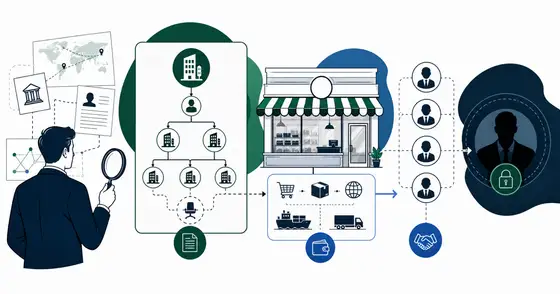
Shell Companies, Front Companies and Sanctions Evasion
Separate shell, front and proxy structures, recognise sanctions-evasion indicators and choose evidence-led investigation steps for CGSS scenarios.

Sanctions Compliance Program Governance: CGSS Guide
Define board, senior management, sanctions officer and three-lines responsibilities, then measure whether a sanctions program works in practice.

Asset Freezing, Blocking and Rejecting: CGSS Guide
Distinguish asset freezing, blocking and rejecting, understand licence scope and choose the correct jurisdiction-specific sanctions response.
Ready to Prepare for ACAMS CGSS?
Use source-grounded study tools and realistic practice to build accurate recall and exam-day confidence.
Explore Course Preparation