
Table of Contents
ACAMS CGSS
Explore source-grounded summaries, flashcards, reference tools and realistic mock practice.
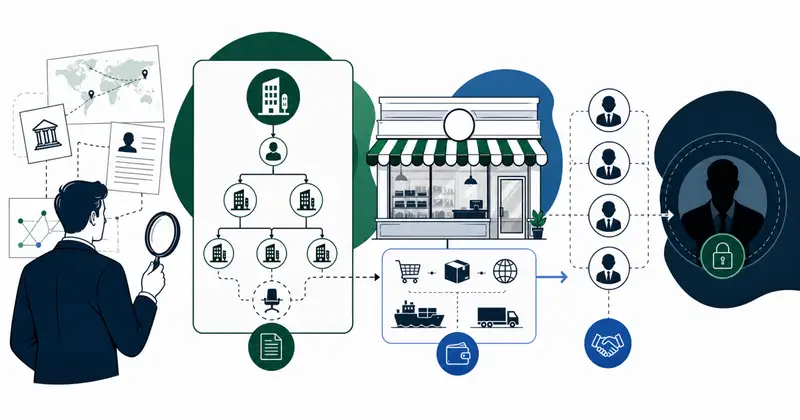
Quick answer: A shell company has little independent operating presence; a front company appears to conduct real business while masking another party or purpose; a proxy acts for someone else. None proves sanctions evasion alone. The task is to identify who ultimately owns, controls, benefits from and directs the activity.
Sanctions evasion often changes the visible path without changing the underlying objective. A new company, intermediary or payment route may separate the restricted party’s name from the transaction while leaving control or benefit intact.
Shell, Front and Proxy: The Difference
| Structure | Core feature | Main investigation question |
|---|---|---|
| Shell company | Little or no independent operating presence | Why does it exist, and who owns or controls it? |
| Front company | Visible business masks a hidden party or purpose | Does the stated trade match the actual activity? |
| Proxy | Acts for another person or entity | Who gives instructions and receives the benefit? |
| Intermediary | Sits between parties to facilitate activity | Is its role commercially necessary and transparent? |
These categories can overlap. A shell may be used as a front, while a nominee director acts as a proxy. The label is less important than the evidence showing ownership, control, instructions, purpose and benefit.
Common Evasion Patterns
Restricted parties may use layered entities, nominees, relatives, trusted associates or professional intermediaries to distance themselves from an asset or transaction. They may change company names, directors, addresses or ownership percentages after designation.
Other patterns include routing payments through third countries, splitting transactions, using unrelated business descriptions, hiding the end user, altering invoices or shipping documents, and replacing a known counterparty with a newly formed entity.
The decisive issue is not novelty. A newly incorporated company can be legitimate, and an indirect route can have a valid logistics explanation. Concern rises when the explanation conflicts with timing, documents, economics or connected-party evidence.
Red Flags That Need Context
- a company with no clear staff, premises or business footprint handling large transactions;
- ownership layers that do not match the stated commercial purpose;
- a sudden transfer of shares or assets near a designation date;
- directors or signatories shared with restricted parties or their known network;
- invoices that use vague descriptions or prices inconsistent with the goods;
- payment from an unrelated third party without a credible reason;
- rapid changes in names, addresses, counterparties or transaction routes;
- an end user or destination that cannot be verified; and
- a former owner who still gives instructions or receives economic benefit.
A red flag should guide the next question. It should not be copied into a case file as if it were a final finding.
Free ACAMS Certified Global Sanctions Specialist (CGSS) Practice Questions & Exam Preview
Try 15 ACAMS Certified Global Sanctions Specialist (CGSS) practice questions from Governance and Enforcement
Practice ACAMS Certified Global Sanctions Specialist (CGSS) exam questions with answers and explanations. The full course includes 5 mock exams and chapter study tools.
Exam Preview
Which statement describes “Strict liability” without overstating it?
Flashcards
What was the first recognized global body to impose sanctions?
Focus Learn
- Purpose, creation, amendment and enforcement of sanctions
- UN, EU, US, UK and other jurisdictional regimes
- Multilateral, unilateral, primary, secondary and extraterritorial measures
- Targeted, sectoral, trade, financial, vessel and terrorism-related sanctions
- Ownership, control and regime-specific 50% analysis
- General and specific licences, exemptions, exceptions and delisting
- Governance, risk-based controls, training, assurance and enforcement consequences
Sanctions are restrictive measures used to influence conduct, protect international or national security, respond to threats, limit access to funds or resources, and pursue foreign-policy objectives. They may be imposed multilaterally or unilaterally and can target states, sectors, entities, individuals, vessels, goods, technology or defined activity. A sound exam answer begins by identifying the authority and the restriction; the word sanctions alone does not determine the legal effect.
The United Nations Security Council can establish binding measures for UN member states, but implementation occurs through national or regional law. The European Union, United States, United Kingdom and other jurisdictions maintain their own regimes and competent authorities. A multinational organization…
Unlock all Focus Learn
Open every chapter’s key areas, pitfalls, exam traps and key numbers.
An Evidence-Led Investigation
Start with the customer and transaction record, then map all parties: legal owners, beneficial owners, controllers, directors, signatories, intermediaries, counterparties, banks, vessels and end users where relevant.
Verify incorporation details and business activity through reliable independent sources. Reconcile the purchase order, invoice, bill of lading, customs description, payment message and receiving account for the same goods, route, quantity and counterparties. A mismatch between a low-value invoice and a high-risk cargo is stronger evidence than recent incorporation on its own.
Build a timeline around important events. A restructure that occurred long before a designation may have a different explanation from one executed immediately afterward. Trace funds and value rather than relying only on the names shown on one document.
If information remains inconsistent or incomplete, escalate. The outcome may require enhanced due diligence, rejection, blocking, reporting, exit or another response depending on the governing regime and the facts.
Ownership Changes After Designation
A formal transfer does not automatically remove sanctions exposure. Review whether the restricted party received fair value, retained contractual rights, controls the new owner, continues to manage the company or benefits through another arrangement.
Percentage ownership is only one part of the assessment. Beneficial ownership and control should be analysed under the applicable framework, including indirect or aggregated holdings where required.
Records should identify which facts were verified, which sources were used, what remained uncertain and why the final action was proportionate.
CGSS Exam Traps
- Shell equals illegal: shells can have lawful purposes; examine the surrounding facts.
- Operating company cannot be a front: real activity can coexist with a concealed purpose.
- New shareholder ends the risk: test control, benefit and timing after the transfer.
- Red flag equals proof: investigate and corroborate.
- Screening the customer is enough: relevant owners, controllers, counterparties and end users may also require review.
- Complexity proves evasion: ask whether the structure has a credible economic and operational explanation.
Continue with maritime sanctions-evasion indicators, then connect the investigation to sanctions screening. The CGSS exam guide maps these topics to the full five-domain blueprint.
Frequently Asked Questions
1 What is a shell company?
A shell company generally has little or no independent operating presence. Shells can serve legitimate purposes, but opaque ownership, unexplained activity or use by restricted parties can create sanctions risk.
2 What is a front company?
A front company presents an operating business while concealing the real controller, beneficiary, counterparty or purpose behind activity. Its visible trade may be used to mask prohibited conduct.
3 Is every shell company involved in sanctions evasion?
No. A shell structure is an indicator requiring context, not proof of evasion. The analyst should assess ownership, control, business purpose, transactions and corroborating evidence.
4 What is a proxy in sanctions evasion?
A proxy is a person or entity that acts for another party, potentially allowing the principal to hide ownership, control, payment instructions or involvement in a transaction.
5 What should an investigator do when a front company is suspected?
Map ownership and control, verify the commercial purpose, review counterparties and payments, compare documents with actual activity, examine timing and escalation indicators and apply the relevant sanctions requirements.
Keep learning
Related Insights
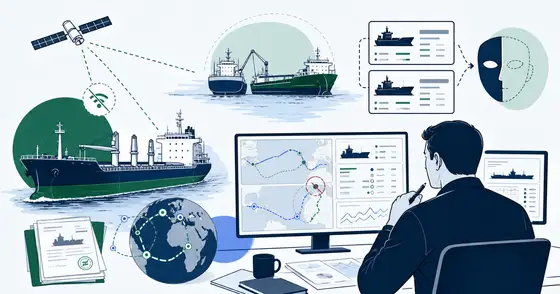
Maritime Sanctions Evasion Red Flags: CGSS Guide
Assess AIS gaps, ship-to-ship transfers, vessel changes and trade-document inconsistencies without treating a single maritime red flag as proof.

Sanctions Compliance Program Governance: CGSS Guide
Define board, senior management, sanctions officer and three-lines responsibilities, then measure whether a sanctions program works in practice.

Asset Freezing, Blocking and Rejecting: CGSS Guide
Distinguish asset freezing, blocking and rejecting, understand licence scope and choose the correct jurisdiction-specific sanctions response.
Ready to Prepare for ACAMS CGSS?
Use source-grounded study tools and realistic practice to build accurate recall and exam-day confidence.
Explore Course Preparation