
Table of Contents
CISI Global Securities Operations
Explore syllabus-aligned study tools, realistic practice and course-grounded AI support.
Global Securities Operations earns its value behind the trade—not at the point of investment advice. It explains the infrastructure and controls that move a transaction from execution to a correctly settled and safely held position.
Trace the Trade Lifecycle
A single securities transaction can involve matching, confirmation, clearing, settlement instructions, cash and asset movements, custody records, reconciliation and later corporate actions. Settlement completes the agreed delivery and payment; custody continues after that point through position records, safekeeping and entitlement processing. A role focused on one is not automatically trained for the other.
GSO is particularly relevant when your work touches that chain:
| Function | Connection to the syllabus |
|---|---|
| Trade support | Capturing, confirming and progressing transactions |
| Settlement | Coordinating delivery of securities and payment |
| Custody | Safekeeping records and asset servicing |
| Reconciliation | Identifying differences between books and external records |
| Operations technology | Understanding the business process a platform supports |
| Operational control | Detecting failures and reducing post-trade risk |
This direct process alignment is what distinguishes GSO from a broad market introduction. A candidate can explain not only what a bond or equity is, but what must happen after it is traded.
The IOC Misunderstanding
Passing GSO does not automatically award the complete CISI Investment Operations Certificate. The official IOC structure generally requires three units, subject to applicable exemptions. CISI advises candidates in FCA-regulated roles to take Introduction to Securities & Investment, UK Financial Regulation and a relevant technical unit. Candidates in firms or roles outside that category may select any three units where their firm agrees. The IOC guide explains the structure.
That distinction should shape the purchase decision. If an employer has asked for “IOC,” identify all required components. If it has asked specifically for GSO because the team handles settlement or custody, the match is much clearer. Other technical units can be more relevant to operational risk, derivatives or a specialised business line.
Free CISI Global Securities Operations Practice Questions & Exam Preview
Try 15 CISI Global Securities Operations practice questions from Clearing, Settlement and Custody
Practice CISI Global Securities Operations exam questions with answers and explanations. The full course includes 5 mock exams and chapter study tools.
Exam Preview
An investor holds securities in twelve overseas markets. Which arrangement illustrates global custody rather than direct custody in each market?
Flashcards
What is the role of an investment manager?
Focus Learn
- MiFID II three client categories: Retail (most protection), Professional (less protection), Eligible Counterparties (ECPs) — lightest regime.
- UK financial-promotion status is separate from MiFID client classification: article 48 uses income/net-asset tests; articles 50 and 50A use certified or self-certified investment knowledge/experience.
- Global custodian vs subcustodian roles; local vs regional subcustodian advantages and disadvantages.
- CREST = Euroclear UK & International (EUI) for UK equities, gilts, Irish securities; DTC/DTCC for US; CHESS for Australian equities; Austraclear for Australian fixed income; HKSCC for HK equities; CMU/HKMA for HK debt; BOJ-NET for Japanese government bonds.
- Euroclear Bank: Brussels-based ICSD with internal, bridge and external settlement. Euroclear Group, not the bank alone, reported €40.7 trillion in custody at end-December 2024.
- Clearstream Banking: formed 1999 (merger of Cedel International and Deutsche Börse Clearing); CBL and CBF; settles 250,000 transactions/day across 150,000 securities in 59 markets.
- SWIFT: founded 1973, operational May 1977, 239 founding banks from 15 countries; SWIFT figures checked 8 October 2026: 53M+ daily FIN messages on average; 11,500+ connected institutions; 220+ countries and territories. ISO 15022 (Nov 2002) and ISO 20022.
- ADRs (US market compliance), GDRs (multi-market capital raising), DIs (foreign shares in CREST; SDRT relief depends on all statutory foreign-security conditions).
- STP, MTFs, OTFs, Systematic Internalisers (SIs), ETFs.
- EMIR transaction reporting T+1; SFTR covers repo and securities lending reporting.
Chapter 1 introduces the full ecosystem of participants in the global securities industry, covering investors, intermediaries, custodians, depositories, and financial messaging systems. Understanding who does what — and why — is the foundation for the rest of the course.
Investor Categories: MiFID II defines three client categories. Retail clients receive the highest level of regulatory protection. Professional clients — considered more experienced and knowledgeable — receive fewer protections and are able to assess their own risk. Eligible counterparties (ECPs), such as investment firms, credit institutions, insurance companies and other regulated financial institutions, benefit from a lighter regulatory regime for transactions between investment firms. Within these categories, inves…
Unlock all Focus Learn
Open every chapter’s key areas, pitfalls, exam traps and key numbers.
Does the Exam Match the Job?
The standard GSO examination has 50 multiple-choice questions over 60 minutes and a 70% pass mark. CISI recommends a minimum of 80 study hours for GSO. The syllabus permits up to 10% unidentified, unscored trial questions with proportionately more time. The IOC page’s 243 Total Qualification Time hours describe the full qualification, not the GSO paper alone. Match this operations syllabus to the target role and confirm any separate authorisation requirements.
Use the syllabus effective for your sitting. An officially published future syllabus does not automatically replace the current assessment specification before its effective date.
Read the GSO syllabus and exam guide while comparing each chapter with the processes in your target vacancy. The more of the trade lifecycle the role owns, the more defensible the study investment becomes.
Frequently Asked Questions
1 Is CISI Global Securities Operations worth it?
It can be valuable for trade-support, settlement, custody, reconciliation and securities-operations roles. It is a technical unit, not automatically the complete Investment Operations Certificate.
2 What is the GSO exam format?
The standard GSO examination has 50 multiple-choice questions over 60 minutes, with a 70% pass mark and a recommended minimum of 80 study hours. The syllabus permits up to 10% additional unscored trial questions with proportionately more time.
3 Is GSO the same as the CISI IOC?
No. GSO is one technical unit. The IOC generally requires three units, subject to applicable exemptions. The accepted combination depends on the role and firm; qualifying international candidates may select any three with their firm’s agreement.
Keep learning
Related Insights

CISI GSO Exam Changes from 21 November 2026
Compare the CISI GSO syllabus changes from 21 November 2026: question weightings, settlement objectives and practical revision priorities for your sitting.
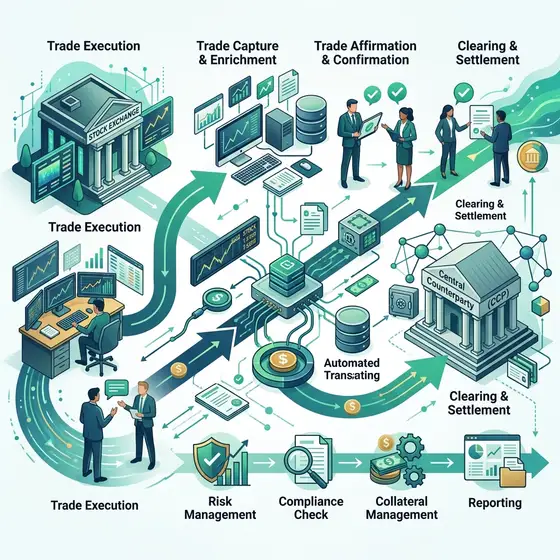
CISI GSO Trade Lifecycle Drill: Interactive Settlement Quiz for Operations Teams
Sharpen your CISI Global Securities Operations exam technique with an interactive trade lifecycle quiz covering settlement cycles, SWIFT messages, bond pricing, and operational control points.
Best CISI Global Securities Operations Mock Exams & Free Sample Papers (2026)
Prepare for the CISI Global Securities Operations exam with five mock exams, free sample questions and source-reviewed answer explanations.
Ready to Prepare for Your Exam?
Prepare with syllabus-aligned study tools, realistic practice and course-grounded AI support.
Explore Courses