
Table of Contents
CISI UAE FRR
Explore syllabus-aligned study tools, realistic practice and course-grounded AI support.
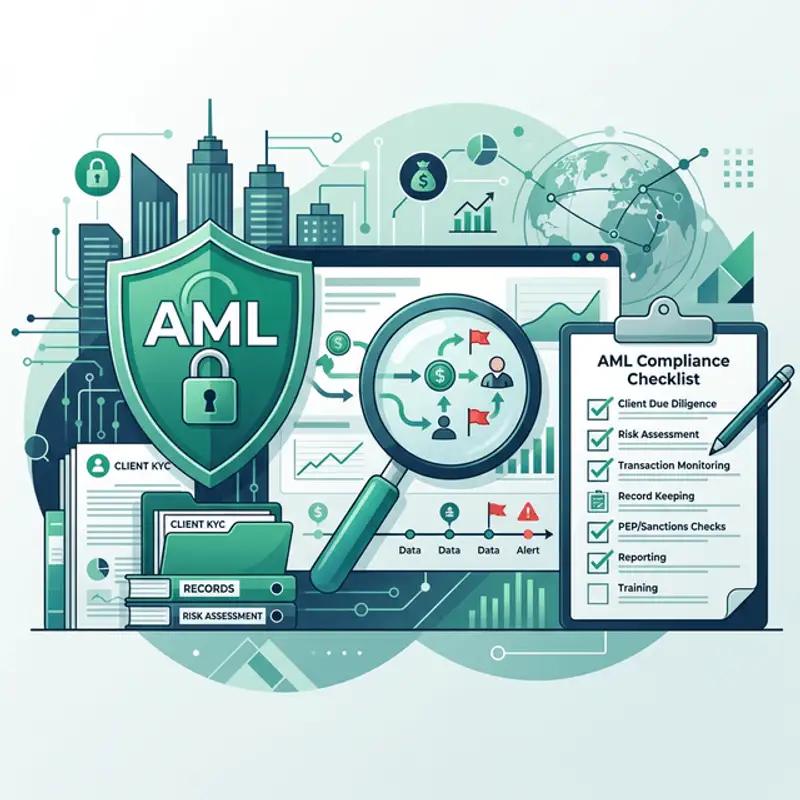
Why AML Matters for Your CISI Exam
Anti-Money Laundering (AML) regulations are a major part of the CISI UAE Financial Rules and Regulations exam. The current syllabus allocates approximately 14 of 100 scored questions to AML/CFT and financing of illegal organisations, subject to the published plus-or-minus-two flexibility for each element.
Understanding AML is not just about passing the exam - it is a critical competency for any finance professional working in the UAE. This guide covers the essential AML and CFT concepts you must master.
The Three Stages of Money Laundering
At the core of the syllabus is the fundamental understanding of how money laundering occurs. You will be tested on your ability to identify which stage of laundering a specific scenario describes.
- Placement: The physical disposal of bulk cash proceeds derived from illegal activity into the financial system. Example: Depositing illicit cash into a retail bank account. This is the stage where the launderer is most vulnerable to detection.
- Layering: The separation of illicit proceeds from their source by creating complex layers of financial transactions designed to disguise the audit trail. Example: Moving funds between multiple offshore accounts or purchasing complex derivatives.
- Integration: The provision of apparent legitimacy to criminally derived wealth. Example: Purchasing luxury real estate or high-end art with the layered funds.
AML vs. CFT: Key Distinctions
While often grouped together, AML and CFT have distinct characteristics that the CISI exam will test. Ensure you understand the core differences:
| Characteristic | Anti-Money Laundering (AML) | Combating the Financing of Terrorism (CFT) |
|---|---|---|
| Source of Funds | Always derived from illegal activities (e.g., fraud, trafficking). | Can be derived from both illegal AND legitimate sources. |
| Primary Objective | To disguise the illicit origin of the funds and make them appear legitimate. | To fund terrorist acts, networks, or individuals, regardless of the source. |
| Transaction Size | Often involves large, structured amounts of money. | Can involve very small, seemingly insignificant amounts. |
| Detection Focus | Identifying suspicious patterns, rapid movements, and lack of economic rationale. | Identifying links to known terrorist entities or high-risk geographic regions. |
Customer Due Diligence (CDD)
Customer Due Diligence is the cornerstone of AML compliance and features prominently in the exam. The three levels you must know are:
- Simplified Due Diligence (SDD): Applied to lower-risk customers where reduced verification is permitted. Available only when specific conditions are met and the institution has assessed the risk as genuinely low.
- Standard Due Diligence (CDD): The baseline requirement for all customer relationships. Includes verifying identity using reliable documents, understanding the purpose and nature of the business relationship, and conducting ongoing monitoring.
- Enhanced Due Diligence (EDD): Required for higher-risk customers, including Politically Exposed Persons (PEPs), correspondent banking relationships, customers from high-risk jurisdictions, and complex corporate structures. EDD involves additional verification, senior management approval, and enhanced ongoing monitoring.
Suspicious Activity Reporting
One of the most frequently tested areas is the obligation to report suspicious activities. Key points for the exam:
- Employees use the institution’s internal channel to disclose suspected cases directly to compliance or the MLRO, with the facts and records needed for review.
- The compliance officer or MLRO investigates the internal disclosure, records the reason for closure or monitoring when reasonable grounds are not established, and files through goAML without delay when reasonable grounds are established.
- Choose the correct report type: an STR supplies the suspicious transaction and account details; a SAR is used for suspicious activity where those transaction details are not available. Do not file both for the same matter merely to be safe.
- Tipping off is a criminal offence - you must not inform the customer or any unauthorized third party that a report has been or will be filed.
- No monetary minimum for suspicion reporting - the external duty is based on reasonable grounds for suspicion, regardless of amount; a monitoring alert by itself is not yet the same conclusion.
Key Numerical Thresholds
The CISI exam frequently tests specific numerical values. Make sure you know:
- AED 55,000: CDD trigger for an occasional transaction, whether carried out once or through linked transactions.
- Record Keeping: Minimum 5 years for transaction records and CDD documents after the end of the business relationship in the UAE.
- Wire transfers: originator information requirements for cross-border transfers.
Politically Exposed Persons (PEPs)
PEPs are a major exam focus. Under UAE regulations:
- Definition: Current and former holders of prominent public functions, their family members, and close associates.
- EDD Requirement: Establishing a relationship with a PEP automatically triggers Enhanced Due Diligence, requiring senior management approval and verification of source of wealth.
Interactive UAE AML / CFT Knowledge Check
Test your understanding of UAE Anti-Money Laundering and CFT compliance with our interactive exam simulator module.
Free CISI UAE Financial Rules and Regulations Practice Questions & Exam Preview
Try 15 CISI UAE Financial Rules and Regulations practice questions from Investment Funds
Practice CISI UAE Financial Rules and Regulations exam questions with answers and explanations. The full course includes 5 mock exams and chapter study tools.
Exam Preview
A private investment fund is preparing a promotional campaign. Which advertising restriction applies to that campaign?
Flashcards
When was the SCA established and where is it headquartered?
Focus Learn
- Establishment and functions of the SCA under Federal Law No. 4 of 2000
- SCA Board: appointed by Cabinet resolution; 4-year terms renewable once exclude the chief executive
- Five licence categories and their paid-up capital requirements (AED 30M, 50M, 50M, 5M)
- Corporate governance requirements for PJSCs
- CISI Code of Conduct eight principles
- SCA powers: licensing, investigation, enforcement, penalties
- Related-party transaction 5% threshold requiring General Assembly approval
- Gift restrictions: AED 500 or less for symbolic gifts
- SCA budget: draft submitted for approval at least 1 month before fiscal year; accounts prepared and presented within 90 days
1. Regulatory Foundation
This chapter establishes the UAE's regulatory foundation through Federal Law No. 4 of 2000, which created the Securities & Commodities Authority (SCA).
The SCA operates as an independent public authority in Abu Dhabi with its own legal personality, full financial, and administrative independence. It is prohibited from entering into commercial activities, having private interests of its own in any undertaking, or owning/issuing securities.
2. SCA Board & Operations
The SCA is managed by a Board of Directors:
- Constitution: Appointed by resolution of the Cabinet of Ministers.
- Tenure: Members other than the chief executive are appointed for 4 years, renewable once only.
- Meetings: The Board must meet at least **once every 2…
Unlock all Focus Learn
Open every chapter’s key areas, pitfalls, exam traps and key numbers.
Frequently Asked Questions
1 How much of the CISI UAE exam covers AML regulations?
The current syllabus allocates approximately 14 of the 100 scored questions to AML/CFT and financing of illegal organisations, with the published element allocation allowed to vary by plus or minus two questions.
2 What are the key UAE AML laws I need to know for the CISI exam?
Focus on Federal Decree-Law No. 20 of 2018 on Anti-Money Laundering, Cabinet Decision No. 10 of 2019, and CBUAE guidelines. Understanding the roles of the Financial Intelligence Unit (FIU) and reporting obligations is essential.
3 What is the difference between STR and SAR in UAE AML regulations?
A Suspicious Transaction Report (STR) covers completed transactions that appear suspicious, while a Suspicious Activity Report (SAR) covers activities that have not yet resulted in a transaction. Both must be filed with the UAE FIU.
4 Do I need to memorise specific monetary thresholds for the CISI exam?
Yes. Key CDD triggers include occasional transactions of AED 55,000 or more and occasional wire transfers of AED 3,500 or more, alongside relationship, suspicion and identification-data triggers.
5 How does the UAE's approach to AML differ from international standards?
The UAE follows FATF recommendations but has implemented additional measures specific to the region, including enhanced due diligence for certain sectors, the goAML platform for reporting, and specific rules for designated non-financial businesses and professions.
Keep learning
Related Insights

UAE CMA (formerly SCA) vs DFSA: Understanding the UAE's Dual Regulatory Framework
UAE financial regulators explained: how CMA (formerly SCA), DFSA, and FSRA divide jurisdiction — and what CISI UAE FRR candidates must know to pass.

Overview of UAE Financial Regulations 2026: CMA, DFSA, & CBUAE
A comprehensive breakdown of the UAE's new financial regulatory framework in 2026 - covering the new CMA, CBUAE Decree 6 of 2025, DFSA, ADGM, and AML goAML standards.

UAE CMA (formerly SCA) Minimum Capital Requirements Explained for 2026
A detailed guide to the UAE Capital Market Authority (formerly the Securities and Commodities Authority) (UAE CMA (formerly SCA)) minimum paid-up capital requirements for financial firms operating in 2026.
Ready to Prepare for Your Exam?
Prepare with syllabus-aligned study tools, realistic practice and course-grounded AI support.
Explore Courses