
Table of Contents
- • The UAE’s Dual Regulatory Framework
- • The UAE Capital Market Authority (formerly the Securities and Commodities Authority) (UAE CMA (formerly SCA)) / CMA
- - Key Responsibilities
- - UAE CMA (formerly SCA) Licensing Framework
- - UAE CMA (formerly SCA) Conduct of Business Rules
- • The Dubai Financial Services Authority (DFSA)
- - DFSA’s Regulatory Approach
- - DFSA Authorised Firm Categories
- • Comparing UAE CMA (formerly SCA) and DFSA
- • The Central Bank of the UAE (CBUAE)
- • Exam Strategy for Regulatory Questions
- - Memorization Techniques That Work
- • Staying Current with Regulatory Changes
Explore syllabus-aligned study tools, realistic practice and course-grounded AI support.

Key Takeaways
- UAE CMA (formerly SCA) / CMA (Mainland UAE): The Securities and Commodities Authority (SCA) was succeeded by the Capital Market Authority (CMA) effective January 2026. UAE FRR is used in specified approved-job pathways; the employer must confirm the exact examination combination. Read more about the CMA rebrand and what it means for candidates.
- DFSA (DIFC): An independent regulator operating under common law. Do not infer an exam requirement from the office location; confirm the role-specific competence and authorisation requirements.
- FSRA (ADGM): An independent regulator in Abu Dhabi operating under common law. Do not infer an exam requirement from the office location; confirm the role-specific competence and authorisation requirements.
- Action: Preview one UAE FRR syllabus topic using our Free UAE FRR Topic Questions, then use full mock exams for broader practice.
The UAE’s Dual Regulatory Framework
The UAE operates a unique dual regulatory system for financial services, and understanding this framework is essential for anyone preparing for the CISI UAE Financial Rules and Regulations exam. This comparison focuses on two capital-market frameworks, rather than every UAE financial supervisor:
- UAE Capital Market Authority (formerly the Securities and Commodities Authority) (UAE CMA (formerly SCA)) — Oversees financial markets across the UAE mainland
- Dubai Financial Services Authority (DFSA) — Regulates financial activities within the DIFC
Additionally, the Central Bank of the UAE (CBUAE) supervises institutions and activities within its banking, insurance and monetary/payment perimeter, and the FSRA supervises financial services in ADGM. These jurisdictional distinctions are useful professional context, but the current UAE FRR syllabus does not allocate separate DFSA or FSRA elements. Review the latest syllabus changes and weightings against the eight published exam elements.
The UAE Capital Market Authority (formerly the Securities and Commodities Authority) (UAE CMA (formerly SCA)) / CMA
The CMA is the federal capital-markets regulator. The capital-market law distinguishes financial free zones from its onshore perimeter, while provisions concerning dealings within the State can involve foreign or financial-free-zone issuers. Do not infer an exemption from all federal obligations simply from a DIFC or ADGM address.
Important 2026 Update: Effective January 2026, the Securities and Commodities Authority (SCA) was succeeded by the Capital Market Authority (CMA) under Federal Decree-Law No. 32 of 2025. Learn about all the practical implications of the UAE CMA (formerly SCA)-to-CMA rebrand.
The former SCA was established under Federal Law No. 4 of 2000. CMA is its legal successor under the current law; its mandate includes:
Key Responsibilities
- Licensing and supervision of financial markets, brokers, and intermediaries
- Regulating listed companies and ensuring corporate governance
- Protecting investors through market surveillance and enforcement
- Overseeing mutual funds and collective investment schemes
- Combating market abuse including insider dealing and market manipulation
UAE CMA (formerly SCA) Licensing Framework
The UAE CMA (formerly SCA) requires specific licences for different financial activities. Key categories include:
- Brokerage firms — Licensed to execute buy/sell orders on behalf of clients
- Financial advisors — Licensed to provide investment advice (see how to become a licensed financial analyst in the UAE)
- Fund managers — Licensed to manage collective investment vehicles
- Market makers — Licensed to provide liquidity in specific securities
- Custodians — Licensed to hold and safeguard client assets
For the CISI exam, you should understand the licensing requirements, capital adequacy standards, and conduct of business rules that apply to each category. For individual competency routes, technical-exam equivalency may be considered under specific conditions; this is not a firm-licence exemption.
UAE CMA (formerly SCA) Conduct of Business Rules
The UAE CMA (formerly SCA) imposes strict conduct requirements on regulated firms:
- Client classification — Firms must classify clients appropriately and provide suitable protections
- Best execution — Orders must be executed on terms most favourable to the client
- Conflict of interest management — Firms must identify, manage, and disclose conflicts
- Financial promotions — Marketing materials must be fair, clear, and not misleading
- Complaint handling — Regulated firms must maintain complaint procedures
Practical scenario: Imagine a mainland brokerage in Abu Dhabi receives an order from a retail client to purchase shares on the Abu Dhabi Securities Exchange (ADX). The firm must first verify the client’s classification (retail vs. professional), then apply best execution obligations under CMA rules — selecting the execution venue and timing that achieves the best possible outcome for that client. If the firm also holds the same stock in its proprietary book, it must disclose and manage that conflict of interest before proceeding.
Free CISI UAE FRR Practice Questions & Exam Preview
Try 15 CISI UAE FRR practice questions from Investment Funds
Practice CISI UAE FRR exam questions with answers and explanations. The full course includes 5 mock exams and chapter study tools.
Exam Preview
A private investment fund is preparing a promotional campaign. Which advertising restriction applies to that campaign?
Flashcards
What makes disclosure-related dealings invalid?
Focus Learn
- 1.1.1 SCA incorporation, organs and financial affairs
- 1.1.2 Establishing and administering securities and commodities markets
- 1.1.3 Clearing, settlement, ownership, custody and supervisory intervention
- 1.1.4 Disclosure, transparency and insider transactions
- 1.2.1 SCA functioning, governance, administration and finances
- 1.2.2 Market licensing applications and SCA supervision
- 1.3.1 Market operating regulations, membership, trading and finances
- 1.4.1 Corporate Governance Guide pillars, objectives and responsibilities
- 1.4.2 Gifts, board conflicts, insiders and related parties
- 1.5.1 CISI Code of Conduct and professional judgment
1.1.1 SCA incorporation, organs and financial affairs
Purpose and legal status
Federal Law No.4 of 2000 establishes the SCA in Abu Dhabi as a public authority with separate legal personality and financial and administrative independence. It reports to the Cabinet of Ministers. Its purposes include sound investment of savings, accurate transactions, prices determined by supply and demand, investor protection, investment awareness and financial and economic stability. It must not conduct commercial business, hold private interests in undertakings, or own or issue securities.
Regulatory powers
The SCA proposes regulations on its functioning, market licensing and monitoring, and acceptance, listing, cancellation or suspension of securities and commodities for Cabinet resolution…
Unlock all Focus Learn
Open every chapter’s key areas, pitfalls, exam traps and key numbers.
The Dubai Financial Services Authority (DFSA)
The DFSA operates within the Dubai International Financial Centre (DIFC), an independently regulated financial free zone. The DIFC has its own legal system, courts, and regulatory framework, modelled on international best practices. For an in-depth look at the DFSA’s latest requirements, see our guide on the DFSA operational resilience framework.
DFSA’s Regulatory Approach
The DFSA follows a risk-based regulatory approach, meaning the intensity of regulation is proportionate to the risk posed by each firm. Key aspects include:
- Authorisation and licensing of firms operating within the DIFC
- Prudential regulation — capital requirements and financial resource management
- Conduct of business regulation — rules governing how firms interact with clients
- Market regulation — oversight of NASDAQ Dubai and the DIFC market
- Anti-Money Laundering — AML/CFT regime within the DIFC, enforced in coordination with the UAE’s national AML framework
Practical scenario: A fintech startup proposes robo-advice from the DIFC. It must identify its actual services and seek the necessary DFSA permissions; commercial registration alone is insufficient. Advice-only activity may fall in Category 4, but managing portfolios or adding other services can change the prudential category. National AML obligations and any business carried on outside the DIFC require their own assessment; there is no general “DIFC gate” exemption from every other obligation.
DFSA Authorised Firm Categories
The current PIB 1.3 rules provide this professional comparison; they are not a separate element of the published UAE FRR syllabus:
| Category | Activity | Description |
|---|---|---|
| Category 1 | Accepting deposits or managing an unrestricted PSIA | Banking and unrestricted profit-sharing investment accounts |
| Category 2 | Providing credit or dealing as principal | Lending or trading with the firm’s own capital |
| Category 3A | Dealing as agent or operating an alternative trading system | Agency execution and alternative trading systems |
| Category 3B | Specified custody, fund trustee or employee money-purchase scheme services | Custody for funds or crypto assets and specified trustee or scheme functions |
| Category 3C | Managing assets or funds and other specified services | Portfolio or fund management, specified custody, trust or stored-value services |
| Category 3D | Specified payment services | Payment accounts, payment transactions or payment instruments |
| Category 4 | Advising, arranging and other listed services | Advice, arranging, administration and other lower-risk services listed in PIB 1.3.6 |
| Category 5 | Islamic financial institution managing an unrestricted PSIA | Sharia-compliant business with unrestricted profit-sharing investment accounts |
Apply the full determining-activity rules and category exclusions. A category number is not permission for every activity. An authorised exchange is an Authorised Market Institution, not simply a Category 5 firm.
Comparing UAE CMA (formerly SCA) and DFSA
While both regulators aim to maintain market integrity and protect investors, there are important differences:
| Aspect | CMA (formerly SCA) | DFSA |
|---|---|---|
| Jurisdiction | UAE mainland | DIFC only |
| Legal framework | Applicable UAE federal legislation | DIFC laws and DFSA rules within its common-law-based framework |
| Primary legislation | Federal laws and decisions | DIFC laws and DFSA rulebooks |
| Governing language | Arabic (official) | English |
| Appeal mechanism | Applicable administrative and UAE court procedures | FMT review and, with permission, DIFC Court appeal on a point of law |
| International alignment | International standards within the UAE federal framework | International standards within the DIFC framework |
| CISI UAE FRR required? | Confirm the approved job and examination combination | Confirm role-specific competence; do not assume the mainland route applies |
The Central Bank of the UAE (CBUAE)
The DFSA regulates a range of financial services in or from the DIFC, including banking and insurance. CBUAE separately supervises the institutions and activities within its statutory perimeter:
- Banking sector — licensing, supervision and prudential requirements for banks within its perimeter; identify financial-free-zone and cross-border activity separately
- Insurance sector — CBUAE regulates insurance business within its perimeter under the consolidated law; it is not a separate continuing Insurance Authority. Firms must meet solvency requirements and maintain adequate reserves for policyholder protection
- Monetary policy — managing the UAE dirham, which is pegged to the US dollar, and maintaining monetary stability across the economy
- Payment systems — oversight of payment infrastructure including the UAE Funds Transfer System (UAEFTS) for high-value transfers, the Wages Protection System (WPS), and Stored Value Facilities (prepaid cards and digital wallets)
- AML/CFT — supervision of its regulated institutions under the current federal framework, alongside FIU reporting and national coordination arrangements
The CBUAE, CMA and financial-free-zone regulators all operate within the national AML framework, which is useful context for AML compliance. For UAE FRR preparation, however, follow the AML learning objectives named in the current CISI syllabus rather than studying the DFSA rulebook as an additional exam module. The 7-day UAE FRR revision plan can then be mapped to those published objectives.
Exam Strategy for Regulatory Questions
Questions in the current UAE FRR syllabus test your ability to:
- Identify the relevant mainland authority or market body in scenarios drawn from the published learning objectives
- Apply the cited mainland rules on licensing, funds, markets, AML, client protection and trading; DFSA rules are comparison context, not a separate current syllabus element
- Understand licensing requirements — which activities require which type of licence, and how technical-exam equivalency differs from firm authorisation
- Recognise compliance obligations — conduct of business, reporting, and recordkeeping rules
Memorization Techniques That Work
To retain the complex regulatory distinctions, try these proven approaches:
- Three-column comparison table: Create a table with CMA, DFSA, and FSRA as column headers. For each regulatory topic (licensing, client classification, AML reporting, capital requirements), fill in the differences side by side.
- Jurisdiction flowchart: Start with the legal entity, then identify the regulated activity, where it is conducted or marketed, and the actual permissions. Distinguish mainland capital markets (CMA), CBUAE-licensed activities, DIFC (DFSA) and ADGM (FSRA); an office address alone is insufficient.
- Mnemonic device: Use “CDF” only to recall CMA, DFSA and FSRA names. It is not a licensing decision rule: include CBUAE and check the actual legal scope.
- Flashcard drills: Use digital flashcards to memorise the key regulatory bodies, their jurisdictions, and their primary responsibilities. Create comparison cards that highlight the differences between CMA and DFSA approaches to the same topic.
- Timed scenario practice: Give yourself 90 seconds per regulatory scenario question in practice mode. This builds the quick-identification skill the exam demands. For more exam-specific guidance, review the UAE FRR exam fees and booking process.
Staying Current with Regulatory Changes
Both the CMA and DFSA regularly update their regulatory frameworks. Before your exam, check these specific resources:
- CISI website — Always verify you are studying the latest syllabus version. Check the official syllabus and Candidate Update for the sitting; do not assume a universal three-month notice or fixed incorporation delay. Check our syllabus changes and weightings guide for a detailed breakdown.
- CMA portal — The CMA publishes regulatory circulars, board decisions, and updated licensing requirements. Key recent changes include the January 2026 rebrand and updated minimum capital requirements.
- DFSA rulebook — The DFSA maintains a consolidated rulebook online, with tracked changes for recent amendments. Pay particular attention to the General Module (GEN), Conduct of Business (COB), and Anti-Money Laundering (AML) modules.
- CBUAE circulars — The Central Bank regularly issues circulars on AML/CFT compliance, payment system updates, and insurance regulation changes.
CISI tells candidates to check its Candidate Update and the version date of the syllabus for examinable changes; it does not state a fixed incorporation delay. Understanding the wider regulators remains useful professional context, while exam preparation should stay tied to the current learning objectives.
The DFSA Financial Markets Tribunal guide explains the review/appeal distinction in the table. For virtual assets, VARA’s guidance identifies its Dubai perimeter outside DIFC; asset type and activity still matter.
Frequently Asked Questions
1 What is the difference between UAE CMA (formerly SCA) and DFSA regulation in the UAE?
The CMA (formerly SCA) regulates financial markets across the UAE mainland (onshore), while the DFSA regulates financial services within the Dubai International Financial Centre (DIFC), which operates as an independent financial free zone with its own legal framework based on English common law. The legal entity, regulated activity and permissions determine the relevant authority; neither a mainland address nor DIFC commercial registration alone settles financial authorisation. CBUAE and FSRA have distinct responsibilities.
2 Which regulator's rules are tested in the CISI UAE exam?
The published CISI UAE Financial Rules and Regulations syllabus tests the mainland framework across eight elements, including regulatory infrastructure, licensed bodies, funds, markets, AML, client protection, trading and the Dubai Financial Market. It does not list DFSA or FSRA rules as separate examinable elements, so use the current syllabus rather than assuming every regulator in this comparison is tested.
3 Does the UAE CMA (formerly SCA) regulate cryptocurrency in the UAE?
The answer depends on the asset, activity and jurisdiction. CMA has a federal capital-market/virtual-asset perimeter; VARA is a distinct Dubai authority for virtual-asset activities in Dubai outside DIFC. DFSA regulates relevant activity in or from DIFC and FSRA in ADGM, while CBUAE has its own monetary/payment perimeter. Confirm the exact activity and current permissions.
4 What licensing categories does the DFSA have?
The DFSA prudential framework uses Categories 1, 2, 3A, 3B, 3C, 3D, 4 and 5. The determining activities range from accepting deposits in Category 1 through agency dealing in 3A, custody and trustee work in 3B, asset or fund management in 3C, specified payment services in 3D, advisory and arranging services in 4, and an Islamic financial institution managing an unrestricted profit-sharing investment account in 5. An exchange is authorised as an Authorised Market Institution, not placed in Category 5.
5 How often do UAE CMA (formerly SCA) and DFSA regulations change?
Both regulators can issue circulars, guidance and rule amendments during the year. CISI does not promise a fixed 6-to-12-month incorporation schedule, so candidates should check the version date on the official syllabus and the CISI Candidate Update before the exam.
Keep learning
Related Insights
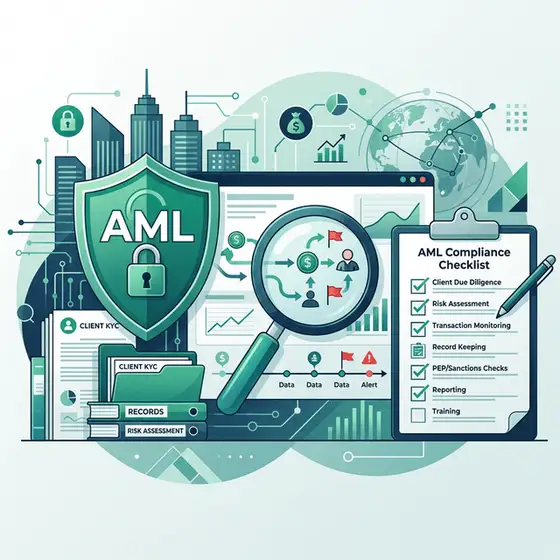
Mastering AML Regulations for Your CISI Exam in the UAE
A focused guide to Anti-Money Laundering (AML) and CFT regulations tested in the CISI UAE Financial Rules and Regulations exam, covering CBUAE requirements and key compliance concepts.

Overview of UAE Financial Regulations 2026: CMA, DFSA, & CBUAE
A comprehensive breakdown of the UAE's new financial regulatory framework in 2026 - covering the new CMA, CBUAE Decree 6 of 2025, DFSA, ADGM, and AML goAML standards.

Navigating UAE Financial Regulations: CMA, DFSA, and the CISI Exams
A complete guide to Dubai and UAE financial regulations. Understand the difference between the CMA (formerly SCA) and DFSA, and how CISI exams fit in.
Ready to Prepare for Your Exam?
Prepare with syllabus-aligned study tools, realistic practice and course-grounded AI support.
Explore Courses