
Table of Contents
- • The Monumental 2026 Regulatory Shifts
- • The Three-Pillar Regulatory Structure
- • CMA: Mainland Securities & Market Conduct
- - Licensing and Fit & Proper Status
- - Corporate Governance
- - Conduct of Business (COB) Standards
- • Anti-Money Laundering (AML/CFT/CPF) Standards
- • Market Conduct & Abuse Prevention
- • Exam Preparation Strategy
CISI UAE FRR
Explore syllabus-aligned study tools, realistic practice and course-grounded AI support.

The United Arab Emirates has rapidly established itself as a global financial powerhouse, attracting financial institutions and investment professionals from across the globe. However, its regulatory landscape is uniquely dynamic and complex—featuring multiple jurisdictions, independent free zones, and frequent updates that reflect international standards.
Whether you are seeking to understand the local market structure or executing compliance operations, this complete guide provides a structured breakdown of the monumental 2026 regulatory framework.
[!IMPORTANT] Preparing for the UAE FRR exam? Try 15 free Investment Funds questions with answer explanations. This is a single-topic preview, not a full mock exam or readiness assessment.
The Monumental 2026 Regulatory Shifts
Two major legislative decrees have completely transformed the financial regulatory environment in the UAE:
- Reconstitution of UAE CMA (formerly SCA) to the Capital Market Authority (CMA): Effective January 1, 2026, the UAE Capital Market Authority (formerly the Securities and Commodities Authority) (UAE CMA (formerly SCA)) was formally reconstituted as the Capital Market Authority (CMA) under Federal Decree-Law No. 32 of 2025. This establishes a modern, highly focused regulator for securities, derivatives, and corporate capital markets.
- CBUAE Consolidation (Decree-Law No. 6 of 2025): This landmark law consolidated banking, insurance, and fintech regulation under the Central Bank of the UAE (CBUAE). The official one-year transition window for regulated firms to adapt and comply with these consolidated regulations expires on September 16, 2026.
The Three-Pillar Regulatory Structure
The UAE operates a multi-jurisdictional financial regulatory architecture:
- The CMA (Capital Market Authority): Formerly the UAE CMA (formerly SCA), the CMA regulates the mainland securities exchanges—Dubai Financial Market (DFM) and Abu Dhabi Securities Exchange (ADX)—as well as mainland brokerage (including the minimum capital requirements for UAE CMA (formerly SCA)/CMA licensing), fund promotions, and public joint stock companies.
- The DFSA (Dubai Financial Services Authority): Independent regulator for the Dubai International Financial Centre (DIFC) free zone, operating on a common law framework.
- The FSRA (Financial Services Regulatory Authority): Independent regulator for the Abu Dhabi Global Market (ADGM) free zone, operating on a common law framework.
Each authority has its own licensing requirements, rulebooks and enforcement mechanisms. Do not assign a regulator from a group’s office address alone: identify the employing legal entity, the regulated activity, where the service is booked or marketed and any cross-border permission before deciding whether CMA, DFSA, FSRA or CBUAE rules govern the scenario.
Free CISI UAE FRR Practice Questions & Exam Preview
Try 15 CISI UAE FRR practice questions from Investment Funds
Practice CISI UAE FRR exam questions with answers and explanations. The full course includes 5 mock exams and chapter study tools.
Exam Preview
A private investment fund is preparing a promotional campaign. Which advertising restriction applies to that campaign?
Flashcards
When was the SCA established and where is it headquartered?
Focus Learn
- Establishment and functions of the SCA under Federal Law No. 4 of 2000
- SCA Board: appointed by Cabinet resolution; 4-year terms renewable once exclude the chief executive
- Five licence categories and their paid-up capital requirements (AED 30M, 50M, 50M, 5M)
- Corporate governance requirements for PJSCs
- CISI Code of Conduct eight principles
- SCA powers: licensing, investigation, enforcement, penalties
- Related-party transaction 5% threshold requiring General Assembly approval
- Gift restrictions: AED 500 or less for symbolic gifts
- SCA budget: draft submitted for approval at least 1 month before fiscal year; accounts prepared and presented within 90 days
1. Regulatory Foundation
This chapter establishes the UAE's regulatory foundation through Federal Law No. 4 of 2000, which created the Securities & Commodities Authority (SCA).
The SCA operates as an independent public authority in Abu Dhabi with its own legal personality, full financial, and administrative independence. It is prohibited from entering into commercial activities, having private interests of its own in any undertaking, or owning/issuing securities.
2. SCA Board & Operations
The SCA is managed by a Board of Directors:
- Constitution: Appointed by resolution of the Cabinet of Ministers.
- Tenure: Members other than the chief executive are appointed for 4 years, renewable once only.
- Meetings: The Board must meet at least **once every 2…
Unlock all Focus Learn
Open every chapter’s key areas, pitfalls, exam traps and key numbers.
CMA: Mainland Securities & Market Conduct
The CMA rules form the absolute core of the CISI UAE licensing exam. Key areas of study include:
Licensing and Fit & Proper Status
Under CMA rules, individuals performing “Controlled Functions” (such as Compliance Officers, MLROs, Advisors, and Brokers) must hold active licenses and meet ongoing “Fit and Proper” standards covering technical competence, honesty, and financial stability.
Corporate Governance
Public Joint Stock Companies (PJSCs) listed on the DFM or ADX must comply with the CMA’s Corporate Governance Code. This includes related-party transaction rules, where any transaction exceeding a 5% threshold requires board and shareholder approval, and companies must maintain strict “Insider Lists” with a 15-day blackout period before financial results.
Conduct of Business (COB) Standards
Licensed firms must adhere to strict business conduct rules:
- Client Categorization: Distinguishing between Retail Clients and Professional Clients (who must meet a net worth threshold of AED 3.67 million / USD 1 million or be a regulated institution).
- Suitability & Appropriateness: Ensuring financial recommendations align perfectly with a client’s objectives and risk appetite.
- Best Execution: Taking all reasonable steps to obtain the best possible price and execution terms for client trades.
Anti-Money Laundering (AML/CFT/CPF) Standards
AML compliance is a matter of critical priority in the UAE, governed by Federal Decree-Law No. 20 of 2018 and augmented by CBUAE’s updated transaction monitoring rules in April 2026:
- Customer Due Diligence (CDD): Mandatory at onboarding and periodically reviewed. Firms must identify the Ultimate Beneficial Owner (UBO) at a 25% ownership threshold or higher.
- Enhanced Due Diligence (EDD): Required for Politically Exposed Persons (PEPs), high-risk jurisdictions, and complex or unusually large transactions.
- goAML Reporting: Staff indicators should follow the firm’s internal escalation process; once the reporting entity has grounds for suspicion, its authorised compliance function files through the FIU’s goAML portal at the earliest. An STR is used where the suspicious transaction and relevant account information are available, while an SAR can cover suspicious activity or an attempted transaction without that transaction information.
- 5-Year Record Keeping: All KYC, transaction, and compliance records must be preserved for a minimum of 5 years following the transaction date or termination of the business relationship.
Market Conduct & Abuse Prevention
CMA actively monitors and prosecutes market abuse:
- Insider Trading: Trading on, or tipping others about, non-public material information is a criminal offense carrying hefty fines and imprisonment.
- Market Manipulation: Practices like wash trading (creating artificial volume), spoofing (submitting orders with intent to cancel), and layering are strictly prohibited.
- Disclosure Timelines: Material developments must be disclosed to the public and the exchange immediately, ensuring fair access to market-moving information.
Exam Preparation Strategy
Staying completely abreast of these regulatory shifts is essential for career advancement and operational compliance in the UAE. To ensure you are fully prepared for the CISI UAE FRR exam:
- Master the Multi-Jurisdictional Model: For each scenario, label the legal entity, activity, client, product and booking location before choosing CMA, CBUAE, DFSA or FSRA. A Dubai address alone does not establish DFSA jurisdiction.
- Internalize AML/CFT Thresholds: Ensure you know the 25% UBO threshold, the 5-year record-keeping requirement, and the goAML reporting process.
- Review Corporate Governance Rules: Focus on the 5% related-party transaction threshold and the 15-day insider trading blackout period for PJSCs.
- Take Scenario-Based Mock Exams: Practice applying the Conduct of Business (COB) rules to realistic client scenarios to test your understanding of Suitability and Best Execution.
Frequently Asked Questions
1 What is the new CMA and what does it regulate?
Effective January 1, 2026, the UAE Capital Market Authority (formerly the Securities and Commodities Authority) (UAE CMA (formerly SCA)) was officially reconstituted as the Capital Market Authority (CMA) under Federal Decree-Law No. 32 of 2025. It regulates securities exchanges (DFM and ADX), investment funds, corporate governance, and market conduct across mainland UAE.
2 What is Federal Decree-Law No. 6 of 2025?
It is the consolidated legal framework governing the Central Bank of the UAE (CBUAE), banking, insurance, and fintech regulation. The 1-year transition period for firms to achieve full compliance expires on September 16, 2026.
3 Do I need a CISI qualification to work in UAE finance?
Yes, the CMA requires professionals performing key regulated functions—such as advising, dealing, or managing investments—to hold certified qualifications. The CISI UAE Financial Rules and Regulations exam is the industry standard certification.
4 What are the core AML requirements in the UAE?
Under Federal Law 20 of 2018 and CBUAE's April 2026 guidelines, requirements include Customer Due Diligence (CDD) with a 25% UBO threshold, Enhanced Due Diligence (EDD) for PEPs, filing Suspicious Transaction Reports (STRs) on the goAML portal, and keeping records for 5 years.
5 What is the difference between DFSA and ADGM regulation?
The DFSA (Dubai Financial Services Authority) regulates the DIFC free zone in Dubai, while the FSRA (Financial Services Regulatory Authority) regulates the ADGM free zone in Abu Dhabi. Both operate separate, English common law jurisdictions distinct from the mainland CMA.
Keep learning
Related Insights

UAE CMA (formerly SCA) vs DFSA: Understanding the UAE's Dual Regulatory Framework
UAE financial regulators explained: how CMA (formerly SCA), DFSA, and FSRA divide jurisdiction — and what CISI UAE FRR candidates must know to pass.
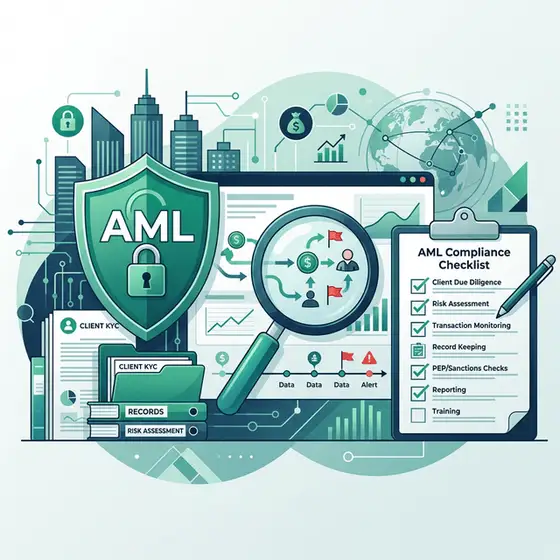
Mastering AML Regulations for Your CISI Exam in the UAE
A focused guide to Anti-Money Laundering (AML) and CFT regulations tested in the CISI UAE Financial Rules and Regulations exam, covering CBUAE requirements and key compliance concepts.

الدليل الشامل لاجتياز امتحان CISI UAE FRR باللغة العربية
كيف تنجح في امتحان القواعد والأنظمة المالية في الإمارات (UAE FRR) من المرة الأولى؟ استراتيجيات الدراسة، نصائح، ونماذج أسئلة تدريبية باللغة العربية.
Ready to Prepare for Your Exam?
Prepare with syllabus-aligned study tools, realistic practice and course-grounded AI support.
Explore Courses