
Table of Contents
ACAMS CAMS
Explore source-grounded summaries, flashcards, reference tools and realistic mock practice.
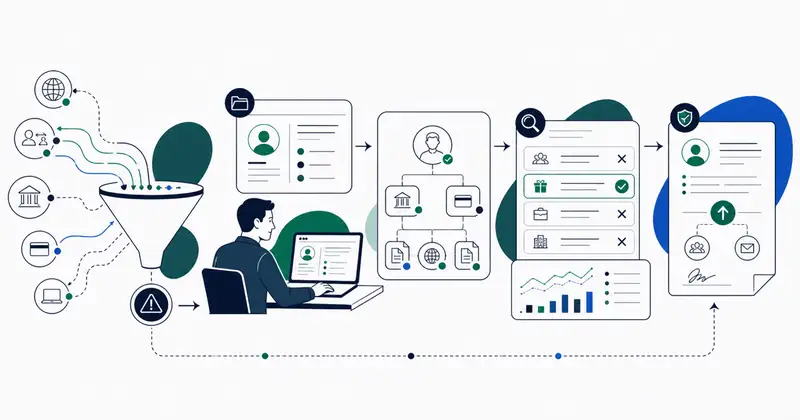
Quick answer: A transaction monitoring alert investigation should move from trigger to context, evidence, analysis and a documented decision. The alert is not proof, and closing or escalating it should never depend only on a score, threshold or model output.
Transaction monitoring is a detective control. It compares activity with scenarios, thresholds, behavioural expectations or modelled patterns. A useful system identifies activity that deserves review; a useful investigator decides what the activity means.
The Alert-to-Decision Workflow
- Confirm the trigger. Identify the rule, model or condition that generated the alert and the data it used.
- Define the scope. Select customers, accounts, counterparties, products, channels and a review period relevant to the concern.
- Build the customer context. Review identity, ownership, purpose, expected activity, risk rating and previous cases.
- Analyse the transactions. Trace value, timing, counterparties, geography, repetition, fragmentation and economic purpose.
- Gather evidence. Use internal records, reliable documents and permitted external information.
- Test explanations. Compare stated reasons with the complete activity and evidence.
- Decide and record. Close, continue monitoring or escalate through the approved process.
The workflow should be proportionate. A direct, well-evidenced explanation may require less expansion than a connected network involving opaque companies and conflicting documents.
What Should the Investigator Compare?
The central comparison is actual activity versus expected activity. Expected activity comes from customer due diligence, but it should not be accepted blindly if the profile is vague or outdated.
Useful comparisons include:
- amounts and frequency;
- senders, recipients and beneficial owners;
- countries, routes and currencies;
- product and delivery channel;
- transaction narrative and available documents;
- links to other accounts, devices or addresses; and
- changes from the customer’s prior behaviour.
A transaction can be individually plausible yet form a concerning pattern when linked with other activity.
Monitoring Data and Scenario Quality
Poor data can make a good monitoring scenario ineffective. Material fields need to be accurate, complete, timely and consistently defined. Data lineage should show how information moved from source systems through transformation to the alert and case.
Scenario coverage should map to assessed risks. Customer segmentation helps apply relevant rules and thresholds to meaningful groups rather than treating all customers identically.
Free ACAMS Certified Anti-Money Laundering Specialist (CAMS) Practice Questions & Exam Preview
Try 15 ACAMS Certified Anti-Money Laundering Specialist (CAMS) practice questions from Building an Anti-Financial Crime Compliance Program
Practice ACAMS Certified Anti-Money Laundering Specialist (CAMS) exam questions with answers and explanations. The full course includes 5 mock exams and complete syllabus coverage.
Exam Preview
Which CAMS knowledge point is defined or described by the following statement? Risk is dynamic and needs to be continuously managed, and the environment in which each organization operates is subject to continual change.
Flashcards
What is money laundering?
Focus Learn
- Definitions and relationships among AML, CFT, sanctions, fraud, bribery/corruption and tax evasion
- Placement, layering and integration without forcing every case into a rigid sequence
- Economic, social, operational, legal, reputational and concentration consequences
- Banking risks: transfers, correspondent banking, payable-through accounts, concentration accounts and private banking
- PEPs, high-risk customers, source of wealth/funds and structuring
- MSBs, PSPs, ecommerce, prepaid access, securities, insurance and virtual assets
- Casinos, real estate, high-value goods, gatekeepers, accountants and TCSPs
- Trade-based laundering, BMPE, corporate vehicles, trusts and beneficial ownership
- Terrorist-financing channels, informal value transfer systems and nonprofit organizations
Financial crime risk begins with the purpose and movement of value. Money laundering takes criminal proceeds and disguises their illegal source so the value can be used in apparently legitimate or further illegal activity. The familiar placement, layering and integration model remains useful: placement introduces criminal value into the financial system, layering creates distance and complexity, and integration returns the value in a form that appears legitimate. Real cases do not always follow a neat sequence, so the examiner may give facts that combine stages. Focus on what the transaction is doing: entering the system, obscuring the trail, or allowing apparently legitimate enjoyment of the proceeds.
The current CAMS domain is wider than money laundering alone. Counter-terrorist financi…
Unlock all Focus Learn
Open every chapter’s key areas, pitfalls, exam traps and key numbers.
Threshold Tuning Without Creating Blind Spots
Changing a threshold because the team has too many alerts is not sufficient. Tuning should be based on risk, data and testing.
Above-the-line and below-the-line testing can examine what is detected around a threshold and what might be missed just below it. The organisation should understand how a change affects alert quality, workload and exposure before approval.
Fewer alerts may mean greater efficiency, or it may mean that activity is no longer being detected. Operational efficiency is valuable only when control effectiveness is preserved.
From Investigation to Reporting Decision
The investigator should document the case trigger, review scope, evidence, analysis and unresolved concerns. If escalation is needed, the authorised reporting function applies the jurisdiction’s legal test and timeline.
The case record should not claim criminal guilt. The institution investigates activity for control and reporting purposes; law-enforcement bodies investigate crimes and courts determine legal outcomes.
Confidentiality also matters. Customer contact, account restrictions, exit decisions and responses to requests must be coordinated so protected reporting or investigation activity is not improperly disclosed.
Technology Supports, but Does Not Own, the Decision
AI, machine learning, network analysis and investigation platforms can enrich data, connect relationships, prioritise cases and support workflow. They also introduce model, data, explainability, bias, drift and automation-risk questions.
A network link is an investigative lead, not proof. A model score is an input, not a final legal or reporting decision. Strong governance includes validation, acceptance criteria, change control, human review, fallback arrangements and performance monitoring.
CAMS Exam Traps
- Alert equals suspicious: the alert opens a review; it does not settle it.
- Customer explanation equals evidence: test the statement against records and activity.
- Low alert volume equals success: validate coverage and missed risk.
- High-risk customer equals exit: determine whether lawful, proportionate controls can manage the exposure.
- Model output equals accountability: the organisation remains responsible.
- Case closure needs no record: document why the facts resolved the concern.
Start with AML red flags vs suspicious activity, then see how technology and data affect the workflow in AML technology, AI and data quality.
The strongest exam answer preserves the sequence: detection, context, evidence, analysis, authorised decision and defensible record.
Frequently Asked Questions
1 Is a transaction monitoring alert evidence of money laundering?
No. An alert indicates that activity met a rule, model or risk condition. An investigator must review the customer, transactions, relationships and available evidence before reaching a decision.
2 What should an AML alert investigation include?
It should define the trigger, select a relevant review period, compare activity with the customer profile, examine connected parties and channels, test explanations, document evidence and record the escalation or closure decision.
3 Do fewer alerts mean a better monitoring system?
Not necessarily. Fewer alerts can reflect better targeting or a detection gap. Effectiveness must be assessed through coverage, data quality, threshold testing, missed-risk analysis, investigation outcomes and ongoing validation.
4 What is threshold tuning?
Threshold tuning changes monitoring parameters through evidence, testing, approval and performance review. Its purpose is to improve relevant detection without creating a material risk gap, not simply to reduce workload.
5 Can AI close transaction monitoring alerts automatically?
Technology may prioritise, enrich or support cases, but reliance requires validated data and models, traceable outputs, human review, escalation and monitoring for errors or drift. Accountability remains with the organisation.
Keep learning
Related Insights

AML Red Flags vs Suspicious Activity: What Is the Difference?
Learn how AML red flags differ from suspicious activity, what evidence an investigator should gather and when escalation becomes a defensible decision.

FATF, FIUs, Regulators and Law Enforcement: Who Does What?
Separate the roles of FATF, FIUs, regulators, law enforcement and courts so CAMS exam answers assign standards, intelligence and decisions correctly.
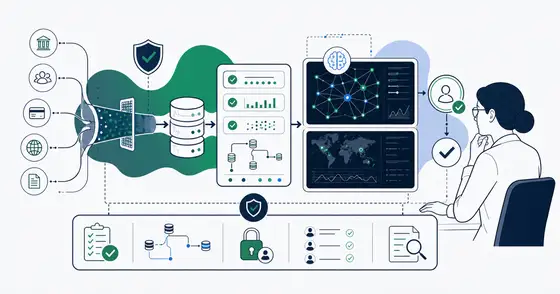
AML Technology, AI and Data Quality: CAMS Exam Guide
Learn how AML technology depends on data quality, validation, human review and accountable AI use across onboarding, screening and investigations.
Ready to Prepare for ACAMS CAMS?
Use source-grounded study tools and realistic practice to build accurate recall and exam-day confidence.
Explore Course Preparation