
Table of Contents
ACAMS CAMS
Explore source-grounded summaries, flashcards, reference tools and realistic mock practice.

Quick answer: FATF sets international standards; national authorities turn them into law and regulation. Regulators supervise. FIUs receive and analyse suspicious reports. Law enforcement investigates crimes and gathers evidence. Courts make legal determinations and impose outcomes within their authority.
Many CAMS questions are role-allocation questions disguised as financial-crime scenarios. Two answers may describe useful actions, but only one assigns the task to the actor with the proper authority.
Role Map
| Actor | Primary function | Common exam mistake |
|---|---|---|
| FATF | International standards, risk-based approach, typologies and mutual evaluation | Treating recommendations as identical law everywhere |
| National legislature or authority | Creates the applicable legal and regulatory framework | Ignoring jurisdictional differences |
| Regulator or supervisor | Supervises firms, examines controls and uses regulatory powers | Treating supervision as criminal prosecution |
| FIU | Receives and analyses reports and develops intelligence | Treating intelligence as a court judgment |
| Law enforcement | Investigates crime and gathers evidence | Expecting a private firm to use police powers |
| Court | Determines legal questions and outcomes within its jurisdiction | Assuming an alert or report proves guilt |
What FATF Does—and Does Not Do
FATF sets international standards for anti-money laundering, counter-terrorist financing and proliferation financing. It promotes a risk-based approach, studies methods and trends and assesses whether jurisdictions have effective systems.
FATF recommendations are not a single global statute. Countries implement standards through national law, regulation, guidance and supervision. A CAMS answer becomes weak when it applies a familiar requirement from one country to every jurisdiction without checking the governing framework.
FATF-style regional bodies support regional cooperation, assessments and guidance. Mutual evaluations consider technical compliance and effectiveness. Public statements and monitoring can inform country risk, but they do not replace customer-specific analysis.
What Regulators and Supervisors Do
Regulators protect the integrity and stability of their sectors through the powers given by their legal framework. They may license or supervise institutions, set expectations, conduct examinations, require remediation and take enforcement action.
A regulatory finding can identify weak governance, data, due diligence, monitoring, investigation or reporting. The institution remains responsible for correcting the control. It should also record a supervisory request separately from an FIU request because the legal gateway, response owner, confidentiality and purpose can differ even where both seek the same transaction records.
Free ACAMS Certified Anti-Money Laundering Specialist (CAMS) Practice Questions & Exam Preview
Try 15 ACAMS Certified Anti-Money Laundering Specialist (CAMS) practice questions from Building an Anti-Financial Crime Compliance Program
Practice ACAMS Certified Anti-Money Laundering Specialist (CAMS) exam questions with answers and explanations. The full course includes 5 mock exams and chapter study tools.
Exam Preview
Which CAMS knowledge point is defined or described by the following statement? Risk is dynamic and needs to be continuously managed, and the environment in which each organization operates is subject to continual change.
Flashcards
What is money laundering?
Focus Learn
- Definitions and relationships among AML, CFT, sanctions, fraud, bribery/corruption and tax evasion
- Placement, layering and integration without forcing every case into a rigid sequence
- Economic, social, operational, legal, reputational and concentration consequences
- Banking risks: transfers, correspondent banking, payable-through accounts, concentration accounts and private banking
- PEPs, high-risk customers, source of wealth/funds and structuring
- MSBs, PSPs, ecommerce, prepaid access, securities, insurance and virtual assets
- Casinos, real estate, high-value goods, gatekeepers, accountants and TCSPs
- Trade-based laundering, BMPE, corporate vehicles, trusts and beneficial ownership
- Terrorist-financing channels, informal value transfer systems and nonprofit organizations
Financial crime risk begins with the purpose and movement of value. Money laundering takes criminal proceeds and disguises their illegal source so the value can be used in apparently legitimate or further illegal activity. The familiar placement, layering and integration model remains useful: placement introduces criminal value into the financial system, layering creates distance and complexity, and integration returns the value in a form that appears legitimate. Real cases do not always follow a neat sequence, so the examiner may give facts that combine stages. Focus on what the transaction is doing: entering the system, obscuring the trail, or allowing apparently legitimate enjoyment of the proceeds.
The current CAMS domain is wider than money laundering alone. Counter-terrorist financi…
Unlock all Focus Learn
Open every chapter’s key areas, pitfalls, exam traps and key numbers.
What an FIU Does
A financial intelligence unit receives suspicious activity or transaction reports, analyses the information, develops intelligence and disseminates it to competent authorities or other FIUs where permitted.
The reporting institution should provide accurate, useful information without claiming that a crime has been proved. The FIU combines reports and other permitted data to see connections that one organisation may not observe.
FIU intelligence and formal evidence are not interchangeable. Cross-border intelligence sharing may use different gateways from legal processes used to obtain admissible evidence.
Law Enforcement, Evidence and Courts
Law-enforcement agencies investigate crimes, gather evidence and use the powers available under law. Courts determine legal outcomes. Private institutions investigate activity to manage risk, comply with obligations and decide whether escalation or reporting is required; they should not present themselves as prosecutors.
Cross-border cooperation may involve regulatory coordination, FIU exchange, law-enforcement requests or formal legal mechanisms. The correct route depends on whether the need is supervision, intelligence, evidence or asset restraint.
Organisations should centralise official requests with qualified staff, verify legitimacy, preserve records, respond within the applicable requirements and protect confidentiality.
How External Intelligence Should Change Controls
Reports from FATF, FIUs, regulators and other competent bodies can identify typologies, sector vulnerabilities, geographic threats and control weaknesses. A sound AFC function uses them to:
- update risk assessments;
- test scenario coverage;
- review policies and procedures;
- adjust training;
- inform governance reporting; and
- check whether the information is relevant to its customers, products, markets and data.
Copying an external typology directly into a monitoring rule without assessing local relevance can create false confidence.
CAMS Exam Traps
- FATF recommendation equals national law: identify implementation in the relevant jurisdiction.
- FIU equals police: intelligence analysis and criminal investigation are distinct.
- Institution equals prosecutor: firms investigate for control and reporting decisions.
- Report equals proof: a suspicious report communicates concern, not a conviction.
- Country list equals customer decision: combine external country risk with customer-specific facts.
- Information sharing overrides confidentiality: confirm authority, purpose, security and restrictions.
Connect these roles to internal ownership through the three lines of defence and review the complete blueprint in the CAMS exam guide.
When an exam option is unclear, ask one question: does this actor have the authority and purpose described?
Frequently Asked Questions
1 Does FATF make law?
FATF sets international AML, CFT and proliferation-financing standards and assesses implementation. Countries translate those standards into their own laws, regulations, guidance and supervisory practice.
2 What does a financial intelligence unit do?
An FIU receives and analyses suspicious activity or transaction reports, develops financial intelligence and disseminates it to competent authorities or other FIUs as permitted. It is not the same as a court or prosecuting authority.
3 What is the role of an AML regulator?
Regulators supervise relevant organisations, set expectations, conduct examinations and use the powers available under their framework. Their role differs from law enforcement's criminal investigation and a court's final legal determination.
4 Who investigates financial crime?
Law-enforcement bodies investigate crimes and gather evidence under the relevant authority. Financial institutions investigate customer activity for risk, control and reporting purposes without acting as prosecutors or courts.
5 Why does role confusion matter in the CAMS exam?
Scenario options often sound plausible but assign the decision to the wrong actor. Separating standard setter, supervisor, intelligence unit, investigator and court helps eliminate those options.
Keep learning
Related Insights
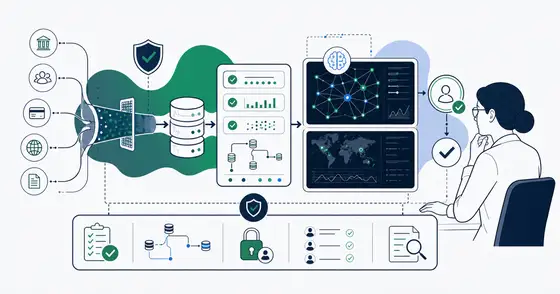
AML Technology, AI and Data Quality: CAMS Exam Guide
Learn how AML technology depends on data quality, validation, human review and accountable AI use across onboarding, screening and investigations.

Three Lines of Defence in AML: Roles and Exam Traps
Understand the three lines of defence in AML, who owns controls, how compliance challenges and why independent assurance must not test its own work.
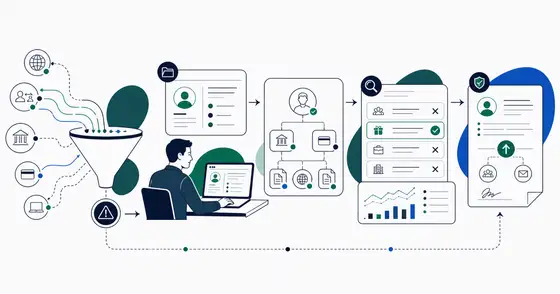
Transaction Monitoring Alert Investigation: CAMS Workflow
Follow a transaction monitoring alert from detection through investigation, evidence, escalation and closure while avoiding alert-volume and automation traps.
Ready to Prepare for ACAMS CAMS?
Use source-grounded study tools and realistic practice to build accurate recall and exam-day confidence.
Explore Course Preparation